Top 7 Trends in Self-Service Rentals 2026
March 7, 2026 · 14 min read
Top 7 Trends in Self-Service Rentals 2026
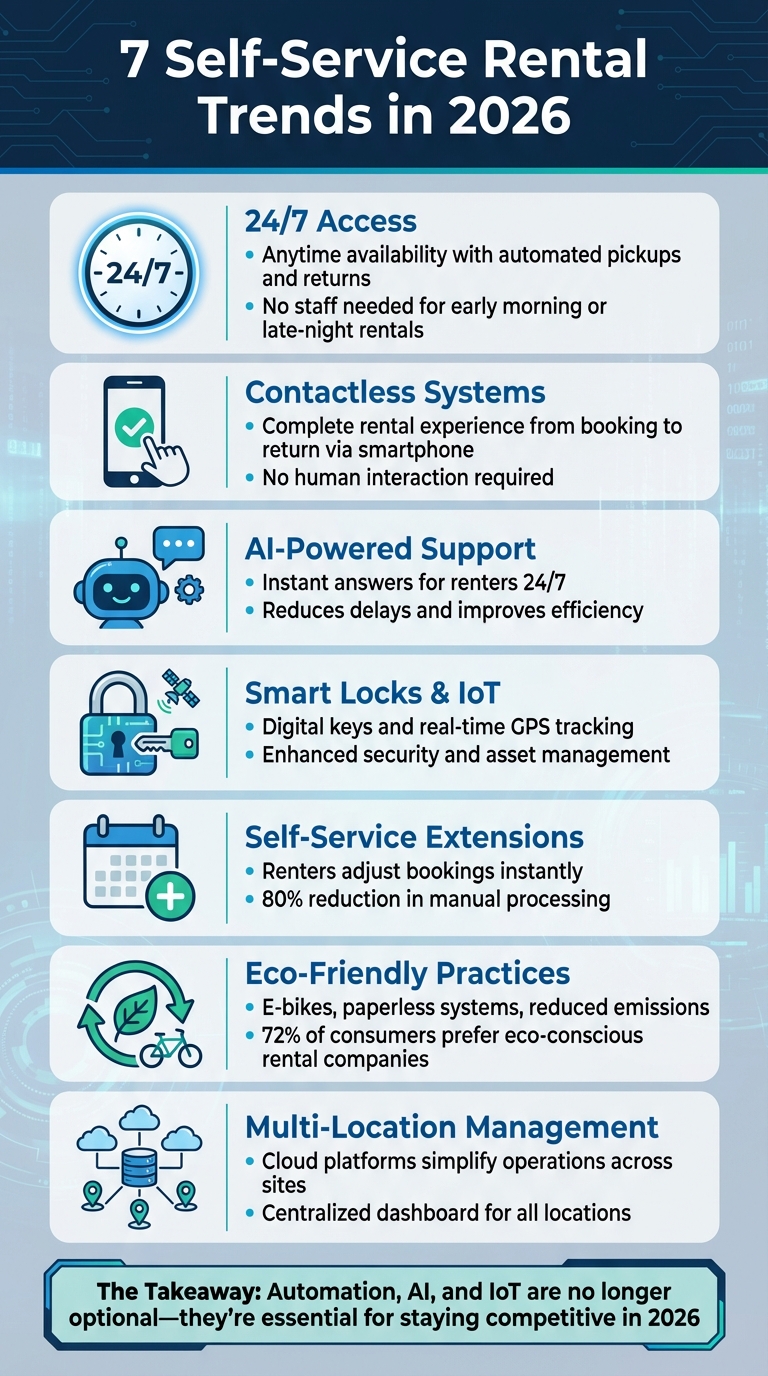
The rental industry in 2026 is all about speed, convenience, and automation. Renters want full control from their phones, and businesses need tech to keep up. Here’s what’s shaping the future of self-service rentals:
- 24/7 Access: Renters expect anytime availability with automated pickups and returns.
- Contactless Systems: Smartphones handle booking, payment, and access - no human interaction required.
- AI Support: Instant answers for renters, reducing delays and improving efficiency.
- Smart Locks & IoT: Digital keys and real-time tracking ensure security and better asset management.
- Self-Service Extensions: Renters can adjust bookings instantly without staff involvement.
- Eco-Friendly Practices: From e-bikes to paperless systems, rentals are going green.
- Managing multiple locations: Cloud platforms simplify operations across multiple sites.
The takeaway? Rental businesses must adopt automation, AI, and IoT to stay competitive. Platforms like Lockii make it easier to expand, reduce costs, and meet modern renter demands.
1. Round-the-Clock Access and On-Demand Rentals
Customer Convenience
These days, renters want access to equipment and vehicles whenever they need them - not just during standard business hours. The old 9-to-5 rental model doesn’t cut it anymore. Whether it’s a trailer for an early morning move at 6:00 AM or a bike for a late-night shift at 11:00 PM, 24/7 availability is now the expectation.
Rental businesses that stick to traditional hours risk losing customers who need flexibility. Automated pickup and return systems solve this issue by offering renters the freedom to access what they need, when they need it. This shift toward instant, anytime access makes automation a must-have for businesses looking to stay competitive.
Automation and Efficiency
Offering round-the-clock service hinges on technology like digital booking systems, automated payments, and smart locks. Here’s how it works: a customer books online, pays digitally, and receives a code or digital key to unlock their rental at the reserved time. It’s simple, fast, and doesn’t require human intervention.
This kind of automation doesn’t just improve convenience - it also slashes labor costs. Businesses no longer need to schedule staff for early mornings or late evenings. The system handles everything from verifying identities to collecting payments and granting access. By automating these processes, companies can serve customers continuously while keeping costs in check. Plus, it enhances customer experience, which is key to building loyalty.
Scalability for Businesses
Automation isn’t just about convenience - it’s also a game-changer for growth. With unstaffed, automated operations, rental businesses can expand into high-demand locations like apartment complexes, college campuses, or transit hubs without the need for extra staff or expensive real estate. This model allows businesses to scale quickly while maintaining profitability.
Take platforms like Lockii, for example. By integrating digital locks with tools like IglooHome, businesses can manage multiple locations seamlessly. This setup makes it easier to expand into new markets while keeping overhead low. The result? Higher revenue potential and a streamlined path to growth.
Webinar: Introduction to self-service rental
2. Contactless and Fully Automated Rental Systems
In 2026, the rental industry has embraced contactless systems, eliminating the need for face-to-face interactions entirely. Today’s customers expect to handle every aspect of their rental experience - browsing, booking, payment, identity verification, and returns - directly from their smartphones. With the best smart locks and app-based access, the days of waiting in line or coordinating schedules are over. Renters simply arrive at the location and gain immediate access to their rental. This streamlined process has become the norm, particularly for younger customers who view delays and disorganized systems as major turn-offs[1].
Automation and Efficiency
Automation is at the heart of these systems, combining tools like digital locks, remote identity verification, instant payment platforms like Stripe, and real-time GPS tracking. These technologies create a smooth workflow, handling everything from booking confirmations to damage reporting. The result? Enhanced customer satisfaction and reduced operational costs. Businesses can now operate around the clock without needing to scale up staffing costs, making 24/7 service a practical reality[1].
Technology Implementation
Contactless systems rely on seamless integration to function effectively. Platforms like Lockii bring together digital locks (via IglooHome), payment processors (like Stripe), and automation tools (such as Zapier) into a single, cohesive system. Businesses can embed booking widgets on their websites, use AI for customer support, and track maintenance and audit logs - all without additional staff. This tech infrastructure allows renters to handle everything digitally, from picking up rentals to extending bookings, reporting issues, and completing returns. For industries like trailer hire, equipment rental, or bike-sharing, these systems make it easier to expand to new locations without the traditional challenges of staffing or real estate expenses.
3. AI-Powered Customer Support
Renters in 2026 expect answers in seconds, not hours. Traditional customer support struggles to meet this demand, especially for 24/7 operations, making AI a game-changer, though it works best when built on a foundation of solid automation. AI-powered systems can handle everything from booking questions to damage reports, ensuring renters - especially Gen Z - get the fast, reliable assistance they demand. Any delays or inconsistent information can quickly lead to frustration.
Customer Convenience
AI tools make life easier for renters by instantly addressing common questions like pickup procedures, extending rentals, damage policies, and return instructions. Forget the back-and-forth of emails or missed phone calls - these systems provide instant responses through SMS, email, or in-app chat. This speed is particularly useful in self-service setups, where no staff is on-site, even for late-night pickups.
By bridging the gap between renters and the information they need, AI plays a vital role in enabling fully automated, contactless rental experiences.
Automation and Efficiency
AI doesn’t just handle basic questions - it also tackles more complex tasks. For example, it can collect damage reports through automated forms, request photos, and organize issues based on urgency. Minor problems are resolved instantly, while more complicated cases are escalated with all the relevant details included. This blend of automation and human oversight allows staff to focus on higher-priority work, like maintaining equipment or growing the business.
Scalability for Businesses
One of AI’s biggest strengths is its ability to grow with your business. A single AI system can manage inquiries across multiple locations, eliminating the need to hire additional staff as your operations expand. This scalability is a huge advantage for self-service rental businesses, allowing them to open new locations without adding significant overhead costs. Platforms like Lockii seamlessly integrate AI tools, ensuring customers get the quick, dependable support they now expect - no matter the scale of the operation.
4. Smart Locks and IoT for Better Security
As contactless automation becomes more common, stronger security measures are no longer optional - they’re essential. Security has always been a sticking point for self-service rentals. Customers worry about theft, unauthorized access, and equipment damage, while businesses face challenges in tracking assets spread across various locations. Smart locks and IoT technologies tackle these issues by offering real-time monitoring and automated control over rental assets. By 2026, these tools will be a foundational part of the rental industry. Building on automation tools already in use, smart locks not only boost security but also provide valuable operational insights.
Customer Convenience
With smart locks, there’s no need for physical keys. Renters can enjoy the flexibility of accessing equipment anytime using a unique digital code or their smartphone. This aligns perfectly with the kind of convenience people expect in today’s digital-first world. Additionally, GPS tracking integrated into these systems allows renters to check the location and status of their rental instantly through an app, adding an extra layer of reassurance.
Automation and Efficiency
IoT systems go beyond just securing access - they also monitor asset usage in real time. Features like GPS and telematics data help businesses identify underused equipment and cut down on idle time. These systems also support predictive maintenance by sending automated alerts when service is needed, ensuring equipment stays in top condition. As noted by RMI ADVANTAGE:
Rental businesses are using usage data and automated alerts to schedule maintenance proactively. This reduces downtime, extends equipment life, and improves customer satisfaction [2].
By addressing maintenance needs before they become problems, businesses can keep equipment ready for use and avoid costly interruptions.
Scalability for Businesses
The real strength of smart locks and IoT shines when businesses manage operations across multiple locations. These tools allow for centralized management by integrating key functions like contracts, service history, GPS tracking, and billing into a single platform. For example, platforms like Lockii combine smart locks with digital booking systems and AI tools to create a secure and seamless self-service rental experience. Lockii works with smart lock providers like IglooHome, enabling businesses to handle access codes, monitor equipment, and track maintenance - all from one dashboard. According to RMI ADVANTAGE:
By 2026, technology will no longer be a competitive advantage reserved for industry leaders. It will be a baseline expectation for survival and growth. [2]
With these tools, businesses can streamline daily operations and scale efficiently, meeting both current needs and future demands.
5. Self-Service Extensions and Flexible Booking
Expanding on the benefits of 24/7 access and AI-powered support, self-service extensions are transforming the rental experience for both customers and businesses. Gone are the days of waiting on hold to extend a booking. Today’s renters expect instant control, and rental companies are stepping up with features that let customers manage their rentals with ease. This isn’t just a matter of convenience - it’s reshaping how the industry operates and grows.
Customer Convenience
With self-service extensions, renters can add extra time to their bookings - whether it’s hours or days - right through an app or online portal. They can check availability in real time, make payments using Stripe, and even update digital locks, all without needing to contact staff. This kind of flexibility is a game-changer for on-demand renters. Instead of dealing with delays or approval wait times, they can handle everything instantly. For last-minute changes, what used to be a hassle now becomes a smooth, quick process.
Automation and Efficiency
Behind the scenes, automation takes over tasks that once required manual effort. When a renter requests an extension, the system automatically checks availability, processes payments, updates inventory records, and sends confirmation messages via SMS or email. According to industry data, these digital workflows can reduce manual processing by as much as 80% [1]. For businesses managing rentals like equipment, scooters, or trailers, this means staff can focus on more strategic tasks rather than routine requests. Tools like Lockii even integrate these automated extensions with features like hire-end quizzes and photos, further enhancing the self-service experience across different locations.
Scalability for Businesses
Centralized management platforms make it easier for rental companies to oversee bookings, extensions, GPS tracking across multiple locations, and payments from a single dashboard. This allows businesses to expand without needing to hire additional staff at every new site, keeping costs in check. Flexible booking options - ranging from short-term hourly rentals to long-term agreements - also help companies navigate seasonal demand shifts while improving customer retention [1]. As national rent growth is projected to stabilize at 2-4% by 2026, offering this kind of adaptability can give rental businesses a significant edge in attracting and retaining customers [3]. Combined with other automated features, this flexibility positions companies for growth and success.
6. Eco-Friendly Rental Practices
Customer Convenience
Renters today want sustainability without giving up convenience. Features like remote-controlled smart thermostats and solar-powered access points allow users to adjust settings easily while reducing energy waste. These tools pair well with 24/7 self-service models, where renters can pick up items like e-bikes, trailers, or equipment using contactless digital locks. This approach eliminates the need for paper contracts and receipts, aligning with modern eco-conscious values. In fact, surveys reveal that 72% of consumers prefer rental companies with strong environmental practices[1]. Amenities such as EV charging stations and advanced air filtration systems are becoming key attractions for renters who prioritize green living.
## 6. Eco-Friendly Rental Practices
Automating Rental Business Operations for Efficiency
IoT devices are revolutionizing how resources are managed. Smart irrigation systems and leak sensors help conserve water, while automated maintenance alerts catch issues early, cutting operating costs by 15–25%[1]. Self-service platforms equipped with GPS tracking optimize fleet usage, reducing idle emissions by up to 30%. Additionally, digital tools streamline end-of-rental audits using photo verification, minimizing waste from damages and extending the lifespan of assets through predictive maintenance.
Scalability for Businesses
Sustainable practices can be scaled effectively across multiple locations thanks to centralized management platforms. Tools like cloud-managed smart locks and energy monitoring systems allow rental companies to expand operations without significantly increasing their carbon footprint. For example, one rental firm successfully grew its self-service EV fleet while cutting emissions by 40% in just 12 months. They achieved this by integrating app-based smart locks and GPS tracking. Centralized systems also keep track of maintenance and damage logs, ensuring consistent eco-friendly standards, reducing labor costs, and lowering real estate expenses - all while appealing to eco-conscious customers in emerging markets.
Technology Implementation
Several technologies are driving these eco-friendly practices forward. IoT-enabled smart locks, AI-powered analytics for predictive maintenance, and paperless payment platforms like Stripe and Zapier are key players. Revel, a scooter rental company in New York City, introduced 24/7 self-service e-scooter stations in June 2024. This initiative cut rider emissions by 65% compared to cars, facilitated 2.1 million rides, and prevented 1,500 tons of CO₂ emissions annually by using contactless access systems. Similarly, smart thermostats can reduce energy use by 20–30% by adjusting heating and cooling based on occupancy detected through IoT devices[1]. These technologies not only reduce costs but also help businesses comply with evolving regulations and meet growing customer expectations for greener operations.
Lockii’s self-service rental software is a standout example of this trend. By integrating smart locks, AI-driven customer support, and cloud-based management tools with platforms like Stripe and Zapier, it enables rental businesses to adopt eco-friendly technologies seamlessly. These innovations help streamline operations across multiple locations while providing a smooth and efficient experience for customers.
7. Multi-Location Management and Growth
Scalability for Businesses
Expanding to multiple locations used to come with its fair share of headaches - hiring more staff, juggling separate systems, and dealing with operational inefficiencies. But in 2026, rental businesses are turning to cloud-based platforms to simplify scaling. These systems eliminate the need for disconnected processes, allowing businesses to grow without the usual overhead. As RMI ADVANTAGE points out:
In 2026, disconnected systems and manual processes will create bottlenecks that limit scalability and responsiveness [2].
By centralizing operations - everything from rental contracts to service histories - businesses can manage multiple locations through a single, unified dashboard. This approach makes operations smoother and more consistent across all branches.
Automation and Efficiency
Centralized tools are a game-changer for managing fleets and assets across multiple locations. With real-time fleet visibility and proactive maintenance scheduling, businesses can avoid the chaos of manual tracking. Automated service alerts and predictive maintenance ensure equipment stays in top shape, even when spread across dozens or hundreds of branches.
Leadership teams benefit from consolidated financial reporting, which offers clear insights into utilization rates and ROI. This data-driven approach supports smarter purchasing decisions and helps businesses focus on what’s working.
Technology Implementation
Unified platforms bring together rental contracts, sales data, and service records into one seamless system. Features like GPS tracking and telematics maximize fleet efficiency, while mobile tools empower field teams to access work orders and equipment details on the go. This ensures consistent service, no matter the location.
Take Lockii, for example. Their platform is built with multi-location management in mind, offering cloud-based solutions that don’t require extra staff or costly real estate. Lockii integrates smart locks, GPS tracking, maintenance logs, and automated customer communication into a single system. Businesses can quickly expand to new locations, handle unlimited orders effortlessly, and maintain high service standards. Customers also benefit, enjoying 24/7 access through contactless pickups. With integrations like Stripe, Zapier, and IglooHome, Lockii ensures smooth operations at scale. As RMI ADVANTAGE highlights:
By 2026, technology will no longer be a competitive advantage reserved for industry leaders. It will be a baseline expectation for survival and growth [2].
Lockii’s approach reflects the growing demand for streamlined rental operations that prioritize both efficiency and customer satisfaction.
Customer Convenience
When backend operations run smoothly, customers reap the rewards. A consistent, hassle-free experience across all locations becomes the norm. Self-service portals let renters check availability, review invoices, and extend bookings without needing to contact individual branches. By 2026, digital-first interactions are the standard - customers expect to reserve equipment online, receive automated updates via SMS or email, and complete transactions entirely through their phones.
This shift not only enhances customer loyalty but also lightens the administrative workload for rental teams. Businesses that embrace these tools are well-positioned to thrive in a world where seamless, digital-first experiences are no longer optional - they’re expected.
Conclusion
The rental industry is undergoing a major shift, and by 2026, technology will no longer be optional - it’s the standard. Companies that rely on outdated, manual processes or disconnected systems will find it increasingly difficult to meet rising customer expectations. As RMI ADVANTAGE highlights:
Rental companies that fail to deliver seamless digital experiences risk losing business to more tech-enabled competitors [2].
The seven trends outlined - like 24/7 access, contactless systems, AI-driven support, and multi-location management - aren’t just nice-to-have features. They’re becoming the foundation for staying competitive. Customers now demand the same convenience they experience in other industries: online booking, real-time updates, self-service options, and instant support. To meet these demands, businesses must shift from reactive operations to proactive, data-driven approaches that incorporate unified platforms, predictive maintenance, and real-time asset tracking.
Here’s the upside: adopting these changes doesn’t have to feel overwhelming. Platforms like Lockii simplify the process, helping businesses modernize operations, cut down on overhead, and manage multiple locations more effectively. This leads to reduced labor costs, scalable expansion opportunities, and happier customers who can handle their entire rental experience directly from their phones.
The time to act is now - before customer dissatisfaction pushes you to change. Investing in unified data systems and mobile self-service tools will position your business for sustainable growth and long-term customer loyalty. The rental market is evolving quickly, and those who embrace these advancements will thrive, while others risk falling behind.
Take a step back and identify where manual processes are slowing you down. Then, explore tools that can integrate everything - rental contracts, service history, billing, and customer communication - into one streamlined system. The businesses that succeed in 2026 will be the ones that started building this foundation today.