
Trailer Towing Capacity Calculator

Trailer Towing Capacity Calculator

August 2, 2026 · 3 min read

Trailer Towing Capacity Calculator

Check Your Tow Setup Before You Travel

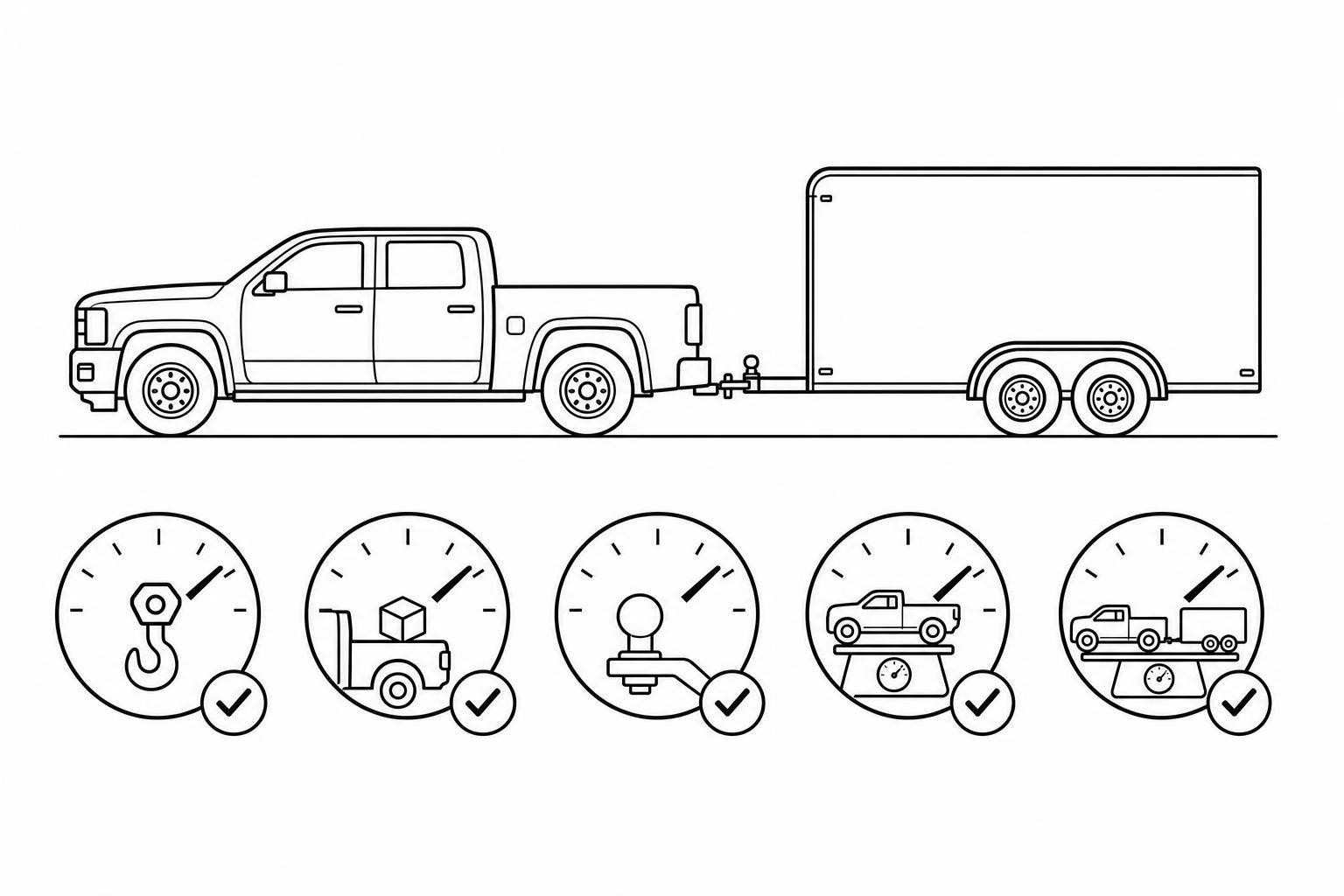
Pulling a camper, utility trailer, or cargo hauler is a lot easier when you know your numbers before leaving the driveway. A Trailer Towing Capacity Calculator helps you estimate whether your setup stays inside key limits like payload, hitch capacity, GVWR, and GCWR. That matters because towing problems don’t always come from trailer weight alone. A combination can look fine at first glance, yet still overload the vehicle once passengers, gear, and tongue weight are added.

Why These Ratings Matter

Safe towing depends on the full picture. Your vehicle’s tow rating tells you how much trailer it can pull, but payload capacity shows how much weight the vehicle can carry. Tongue weight counts against that payload, and it also raises the loaded vehicle weight. GCWR adds another layer by looking at the vehicle and trailer together.

A Smarter Way to Estimate

This trailer weight calculator makes those relationships easier to understand. It shows loaded trailer weight, estimated tongue weight, used payload, remaining payload, and combined weight in plain language. If a number gets close to a limit, you’ll see it right away. That makes this Trailer Towing Capacity Calculator a practical planning tool for road trips, moving days, and weekend towing, especially when you want a quick check before heading out.

They’re related, but they don’t mean the same thing. Max towing capacity is the most trailer weight the manufacturer says the vehicle can pull under specified conditions. Payload capacity is how much weight the vehicle can carry inside and on the hitch, including passengers, cargo, and tongue weight. GVWR is the maximum allowed weight of the loaded vehicle itself. GCWR is the maximum allowed weight of the loaded tow vehicle and loaded trailer together. A setup can be under the tow rating and still be overloaded on payload or GVWR, which is why checking all of them matters.

Tongue weight is the downward force the trailer puts on the hitch, and that weight is carried by the vehicle. In practice, that means tongue weight uses up part of your available payload just like people or luggage do. It also increases the actual loaded vehicle weight, which can push you closer to GVWR. For many bumper-pull trailers, a tongue weight around 10% to 15% of loaded trailer weight is a common estimate, but the exact number can vary based on loading and trailer design.

It’s a strong estimate, but it’s not a substitute for the official ratings and real measured weights. Factory tow ratings can depend on engine, axle ratio, cab style, drivetrain, hitch equipment, and trailer brake requirements. Loading a trailer incorrectly can also change tongue weight in ways an estimate won’t fully capture. Use this tool as a planning check, then verify your vehicle’s door sticker, owner’s manual, hitch rating, trailer data plate, and actual scale weights whenever possible.

Make The Switch,
To Purpose Built