
Depreciation Calculator
August 5, 2026 · 2 min read
Depreciation Calculator
Estimate Asset Value Over Time with Confidence
A depreciation calculator helps you see how an asset loses value year by year without having to build formulas manually in a spreadsheet. Whether you're reviewing equipment costs, planning for accounting records, or comparing methods for financial analysis, a clear schedule can save time and reduce mistakes.
Compare Common Depreciation Methods
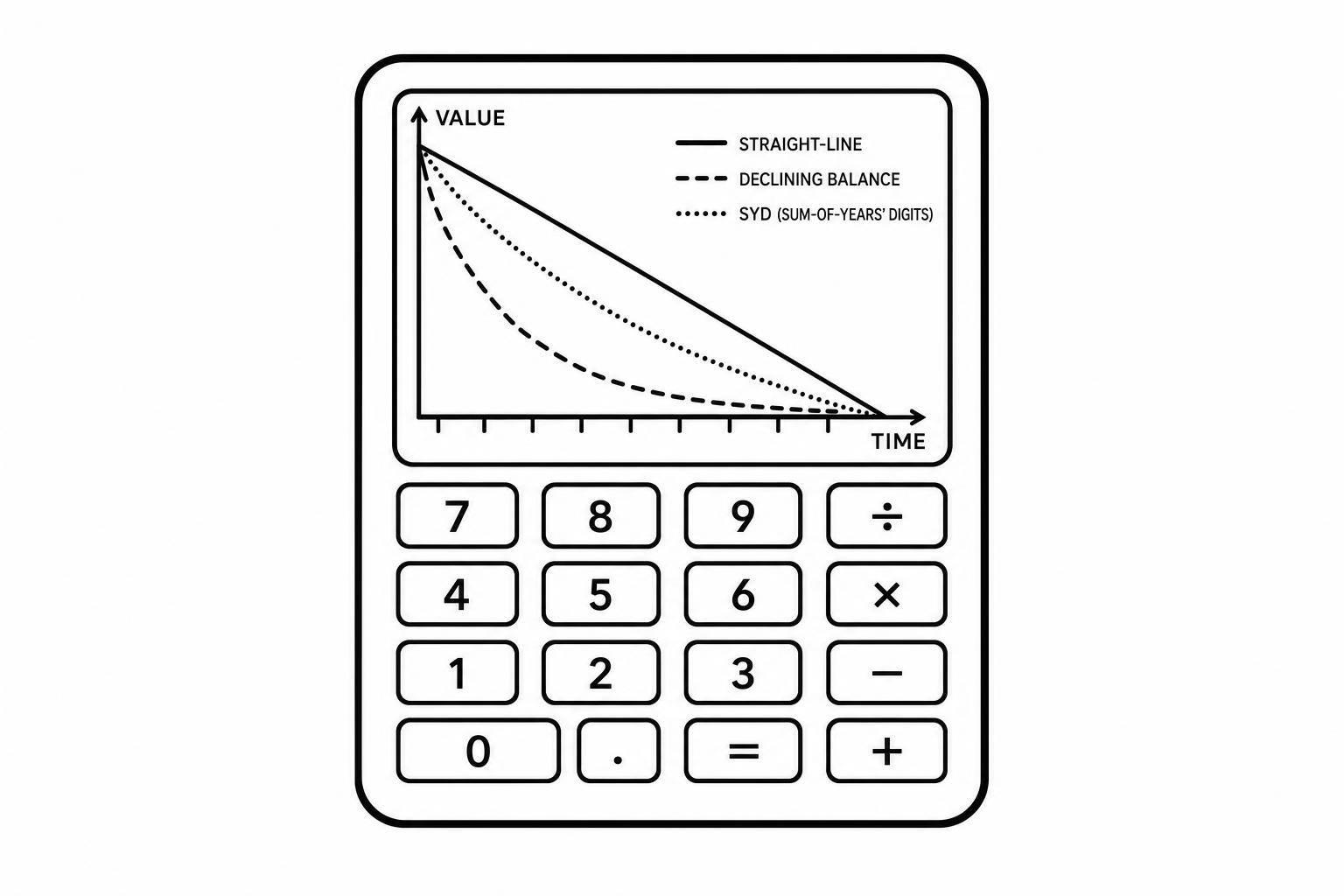
This tool supports straight-line, declining balance, and sum-of-the-years'-digits calculations. Straight-line is the simplest option, with the same expense each year. Accelerated methods, on the other hand, shift more depreciation into the early years of an asset’s life. That difference can matter when you're evaluating cash flow, tax strategy, or long-term book value.
Clear Results, Practical Output
Enter the asset cost, salvage value, and useful life, then choose the method that fits your situation. The depreciation calculator returns annual depreciation, ending book value, total depreciable amount, and a year-by-year table that's easy to read. For straight-line calculations, it also shows monthly depreciation for added detail.
If you need a fast, reliable way to build an asset depreciation schedule, this tool keeps the process simple while giving you the numbers that matter.