
5 Chargeback Fraud Prevention Tips for Rentals
March 29, 2026 · 11 min read
5 Chargeback Fraud Prevention Tips for Rentals
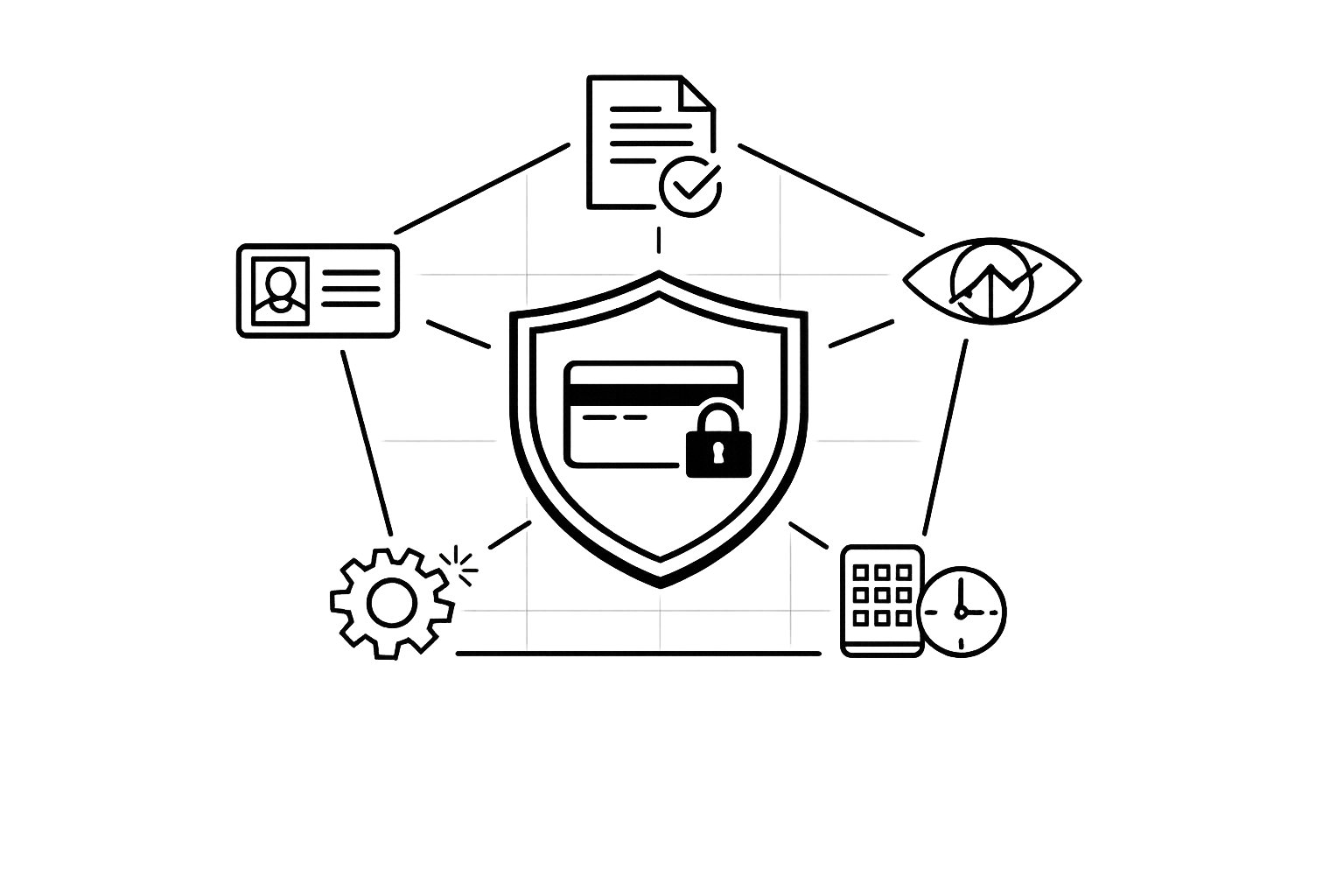
Chargeback fraud is a growing issue for rental businesses, costing the industry billions annually. It often happens when customers falsely dispute charges, claiming unauthorized transactions or unmet services. Here's how you can protect your business, especially when preventing fraud in trailer rentals:
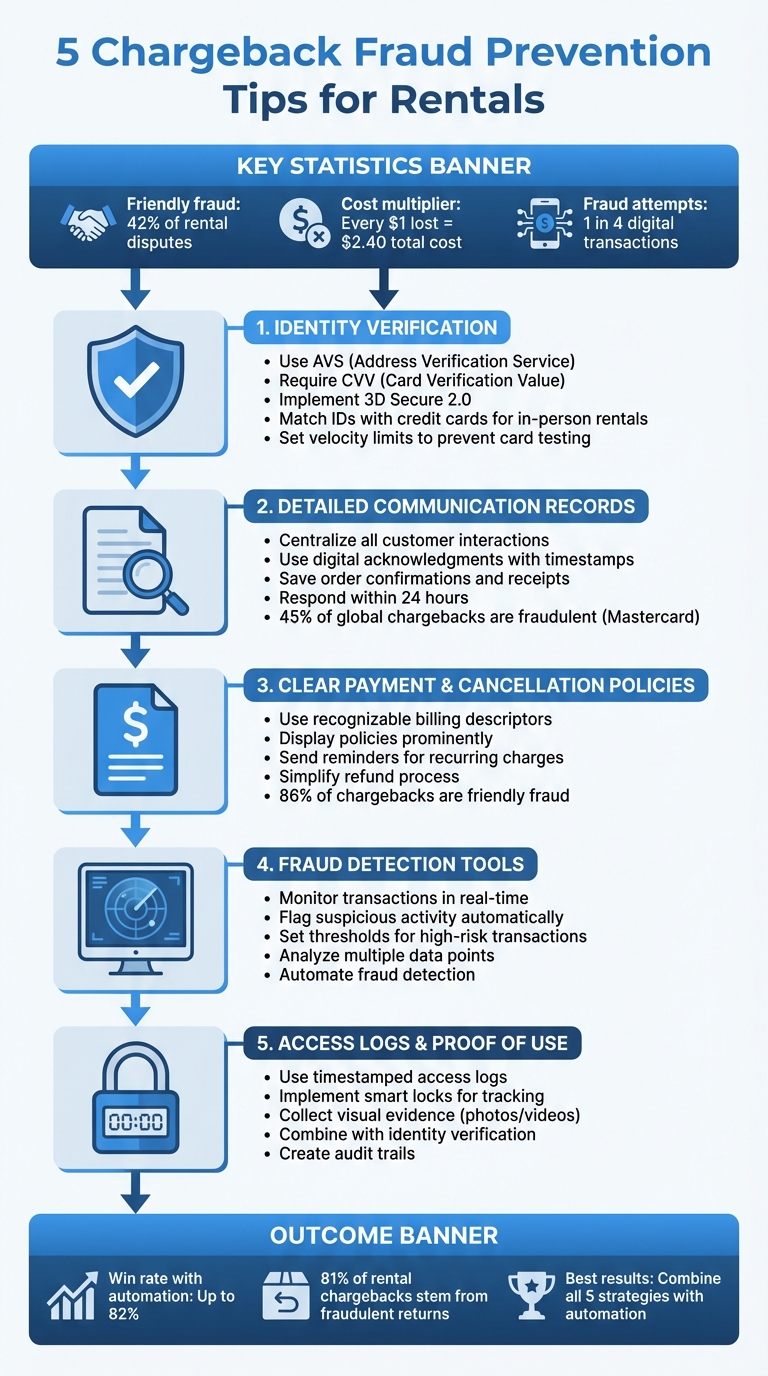
- Identity Verification: Use tools like AVS, CVV, and 3D Secure 2.0 to verify customer identity. For in-person rentals, match IDs with credit cards. For online bookings, collect digital data (IP addresses, timestamps) and set velocity limits to prevent card testing.
- Detailed Communication Records: Centralize all customer interactions (emails, chats, texts) and document agreements, terms, and confirmations. Use digital acknowledgments (e.g., checkboxes) to record customer consent.
- Clear Payment and Cancellation Policies: Ensure your policies are easy to understand and prominently displayed. Use a recognizable billing descriptor and send reminders for recurring charges. Simplify the refund and cancellation process.
- Fraud Detection Tools: Monitor transactions in real time with automated systems to flag suspicious activity. Set thresholds for high-risk transactions and use tools like smart locks to track property access.
- Access Logs and Proof of Use: Use timestamped access logs, smart locks, and visual evidence (photos, videos) to prove service delivery. Combine this with identity verification to counter disputes effectively.
Key Fact: Friendly fraud accounts for over 42% of disputes in the rental industry, and every $1 lost to chargebacks can cost your business $2.40. Implementing these strategies, along with automation, can significantly reduce losses and improve dispute win rates.
🚨 Stop Chargebacks in Vacation Rentals! How to Prevent Fraud & Win Disputes
1. Use Identity Verification
Identity verification is a crucial defense against chargeback fraud. It not only helps prevent the misuse of stolen cards but also reduces the likelihood of disputes.
Start with the basics: Address Verification Service (AVS) and Card Verification Value (CVV). AVS works by matching the billing address provided by the customer with the one on file with their card issuer. Meanwhile, CVV requires the 3-digit security code found on the back of the physical card, ensuring the buyer has the card in hand during online transactions. Together, these tools block many fraudulent attempts using stolen card data.
For more robust protection, consider 3D Secure 2.0. This system adds two-factor authentication to your payment process, requiring customers to confirm their identity through a secure PIN or biometric data like a fingerprint. Not only does this add an extra layer of security, but it also shifts liability for some types of fraud from you, the merchant, to the card issuer.
Whether you're running in-person or contactless rental operations, adapt your identity checks to match the transaction type. For in-person rentals, always compare the name on a government-issued photo ID with the name on the credit card, especially for first-time customers. Train your team to spot inconsistencies between IDs and cardholder names. For contactless transactions, collect digital data during the booking process - such as IP addresses, timestamps, and device details. This creates a solid trail of evidence, which can be invaluable for disputing fraudulent chargebacks.
Another effective measure is setting velocity limits on your booking system. For example, limit the number of transaction attempts from a single IP address or card within a short timeframe. This prevents automated card testing, a common tactic in early-stage fraud. Considering that 1 in 4 digital transactions today is a fraud attempt [5], these limits can stop suspicious activity before it escalates.
If you're looking for an automated solution, Lockii integrates seamlessly with Stripe Identity, providing built-in identity verification for 24/7 rental operations.
2. Keep Detailed Communication Records
Communication and Documentation Practices
When it comes to chargeback disputes, detailed communication records can be your strongest line of defense. Every email, text message, and chat conversation with a customer can help demonstrate that the transaction was legitimate and that your service was delivered as promised.
To stay organized, centralize all customer interactions in one system. This includes emails, SMS, chats, social media messages, and call logs. Using a CRM or a unified inbox can streamline this process and make it easier to track everything. This setup also supports clear documentation of policies, ensuring there’s no room for misunderstandings.
It’s also smart to use digital acknowledgments. For example, during booking, include checkboxes to capture customer agreement to rental terms, cancellation policies, and payment schedules. These should be timestamped and include IP addresses for added validity. With Mastercard reporting that 45% of global merchant chargeback volume is fraudulent [1], having this kind of proof can make a huge difference.
Don’t overlook the small details. Save everything - order confirmations, receipts, pickup confirmations, and proof of rental use. For high-value or unusual orders, it’s a good idea to contact the customer directly to verify details and document that verification attempt. If a refund becomes necessary, process it quickly - ideally within 1–3 business days - and keep a record of the refund agreement. This helps prevent customers from filing a chargeback after the issue has already been resolved.
Train your team to log every customer interaction promptly and aim to respond within 24 hours. Quick and thorough communication can prevent disputes from escalating. Keep in mind that chargeback fraud can cost you more than 3.5 times the original transaction amount once fees and operational costs are factored in [5]. Tools like Lockii’s automated notifications can simplify this process by automatically logging every interaction, ensuring nothing slips through the cracks.
3. Make Payment and Cancellation Policies Clear
Confusion about billing details is a major trigger for disputes, often resulting in what's known as friendly fraud. When customers don’t fully understand charges - or if the charge shows up under a name they don’t recognize - they’re more likely to dispute it with their bank rather than reaching out to you. Friendly fraud, which includes disputes caused by customer misunderstandings, accounts for a staggering 86% of all chargebacks [7].
To avoid this, ensure your billing descriptor matches the name your customers know. For instance, if your legal name is "ABC Rentals LLC" but customers recognize you as "QuickRent", make sure the name on their credit card statement is familiar. If differences exist, explain them clearly at checkout. A recognizable billing descriptor and clear transaction details can go a long way in building trust.
Make your refund and cancellation policies easy to find and even easier to understand. Use straightforward language, display them prominently on your website, and include them in every confirmation email. Adding an acknowledgment checkbox at checkout - where customers must click "I agree" before completing their purchase - creates a timestamped record of their consent to your terms.
For recurring rentals or subscription services, send reminders a few days before each billing date. This keeps customers informed and reduces the likelihood of disputes. Also, ensure the cancellation process is simple and frustration-free. Complicated processes often push customers to file chargebacks out of frustration rather than contacting you.
"Clarity and transparency prevent confusion and help to reduce disputes after purchase." - Worldpay [4]
Finally, make refunds as straightforward as possible. Include clear contact information on every receipt and confirmation email so customers can easily reach out to resolve any issues directly with you.
4. Monitor Transactions and Use Fraud Detection Tools
Keeping a close eye on transactions in real time can stop fraud in its tracks before it escalates into costly chargebacks. Did you know that around 1 in 4 digital transactions is an attempt at fraud? For businesses, the financial pain goes far beyond the initial loss. A $100 disputed rental, for example, can balloon to $350 once you factor in fees, administrative costs, and other expenses tied to chargeback fraud [8].
Payment Monitoring and Fraud Detection Tools
If you've already set up payment monitoring tools like AVS, CVV, and 3D Secure 2.0 (as discussed in Tip 1), you're off to a good start. But you can take things further with advanced systems that automate fraud detection. These tools can flag suspicious activity, such as multiple rapid transactions from the same IP address or card number - classic signs of card testing schemes [8]. They can also set thresholds to catch transactions that exceed typical rental amounts or originate from high-risk locations [8].
Take HexClad, for example. This cookware brand used Chargeflow's automated fraud monitoring system to prepare for the holiday season, a time notorious for chargeback spikes. By analyzing over 50 data points in real time, HexClad saved 199 hours of manual work and boosted its dispute recovery rate by 59% [8]. While HexClad isn't in the rental business, the same approach works across industries - automated tools can spot and stop fraud before it becomes a bigger issue.
"Automation is key for any business in keeping their costs low when working their chargebacks. We're seeing some interesting developments out there where rules engines do most of the heavy lifting." - JP Park, Director - Transact, Fraud, Security, & Disputes Strategy, Merchant Services at Bank of America [1]
Access and Usage Tracking Methods
Fraud detection doesn’t stop at payments. Tracking rental access is another layer of protection that can provide solid evidence of service delivery. For example, top smart locks for rentals can create audit trails that show exactly when a customer accessed and used a rental. Tools like Lockii integrate with digital locks to generate timestamped records, offering undeniable proof to counter "service not provided" claims [2].
Lockii's system doesn’t just track access; it also integrates fraud detection features, providing end-to-end protection throughout the rental process. These detailed logs can be a game-changer when disputing chargebacks, giving you the evidence needed to back up your case effectively.
5. Track Access Logs and Proof of Use
Access and Usage Tracking Methods
Tracking physical access, alongside monitoring payments and maintaining communication with customers, is a powerful way to strengthen your chargeback defenses. Access logs offer clear, timestamped evidence of service delivery, which is crucial when customers dispute charges by claiming they never received the service. These logs can serve as your most reliable proof against "service not provided" claims.
For example, smart locks create timestamped records that confirm property access. This audit trail is objective and indisputable, showing exactly when someone entered the property.
"Smart locks play a pivotal role in reducing chargebacks by providing concrete evidence of guest check-ins and enhancing security. With features like an audit trail, smart locks can offer a verifiable record of when guests accessed the property, serving as proof of their arrival." - Enso Connect [2]
In addition to digital logs, visual evidence can further support your case. Using tools like before-and-after photos or video doorbell footage adds another layer of proof. Devices such as Ring video doorbells can confirm exactly who entered a property and when, directly linking the individual to the transaction [2]. For car or equipment rentals, signed return reports documenting details like mileage, fuel levels, or condition can provide undeniable proof of service fulfillment [3].
To enhance security even further, combining digital proof with identity verification is highly effective. For instance, biometric verification - matching a live selfie to a government ID - can ensure the person accessing the property is the same individual who made the booking. This "zero-trust" approach only generates smart lock codes after identity verification is completed. Systems like Lockii automate rental business operations, creating detailed audit logs that include timestamps, biometric matches, and access records [9].
Friendly fraud accounts for over 42% of all short-term rental payment disputes as of 2026 [9]. Without solid evidence tying a specific individual to the property and the transaction, financial institutions often side with the cardholder. By maintaining a thorough documentation trail - including access logs, photos, and biometric data - you can clearly demonstrate that the service was delivered as promised. These combined records effectively counter chargeback claims by directly linking the customer to their use of the rental.
Conclusion
Putting the strategies discussed into action can help shield your rental business from the growing threat of chargeback losses. As highlighted, a strong, multi-faceted approach is key to protecting your revenue from fraudulent chargebacks. Keep in mind, for every $1 lost to a fraudulent chargeback, the total cost to your business can climb to $2.40 when factoring in labor, administrative fees, and other expenses [6]. With about 81% of chargebacks in the rental industry stemming from fraudulent returns [6], having a solid defense strategy is non-negotiable.
The five tips we've outlined work most effectively when combined. Identity verification helps stop fraudsters before they can even make a booking. Detailed communication records serve as proof that you've addressed customer concerns. Clear policies reduce misunderstandings that lead to disputes. Transaction monitoring can identify stolen cards early on. And access logs with proof of use provide the hard evidence needed to win disputes with financial institutions.
Automation plays a critical role here - manually collecting evidence just isn’t feasible when operating at scale. Tools like Lockii simplify the process by integrating identity verification, automated documentation, smart lock access logs, and audit trails into one system. When customers verify their identity, sign rental agreements digitally, and access equipment via smart locks, you create a nearly indisputable chain of evidence.
With professional chargeback defense teams and automated systems, businesses have achieved win rates as high as 82% [6]. By adopting these five strategies alongside automation, you can significantly cut chargeback losses and better protect your business’s financial health.