How Self-Service Rentals Reduce Operational Costs by 70%
An in-depth analysis of cost savings achieved by rental businesses that switched to contactless self-service technology.
The Shift to Self-Service
The rental industry is undergoing a fundamental transformation. Traditional staffed rental models, where operators need someone on-site to hand over keys, check IDs, and process returns, are being replaced by fully automated, contactless systems.
We surveyed 20 thousand bookings across trailer rental, bike rental, kayak rental, and equipment rental who transitioned to self-service in the past 24 months. The results reveal a consistent pattern: businesses that automate their frontline operations see dramatic cost reductions while actually improving customer satisfaction.
Key Findings
Staffing Costs Dropped by 62%
The single largest expense for traditional rental businesses is frontline staff. Operators who switched to automated lock codes, digital identity verification, and self-service returns eliminated the need for on-site attendants. The average operator reduced staffing spend from $4,200/month to $1,600/month per location.
01
Revenue Per Location Increased by 34%
Self-service locations operate around the clock. Customers can pick up and return items at any hour, not just during business hours. This 24/7 availability translated to an average 34% increase in bookings per location, with evening and weekend slots accounting for 41% of new revenue.
02
New Location Setup Time Fell by 80%
Without the need to hire, train, and roster staff, operators expanded to new locations in days rather than months. One trailer rental operator launched 8 new sites in a single quarter using only smart locks, QR codes, and automated messaging.
03
Automation and Customer Trust
A common concern with removing staff from the rental process is customer trust. Will people feel comfortable collecting a trailer or kayak without a person guiding them?
Our data shows the opposite. Customer satisfaction scores actually increased after the transition to self-service. The primary driver? Speed and convenience. Customers rated the booking-to-pickup experience 4.7 out of 5 when fully automated, compared to 3.9 out of 5 for staffed processes.
What Operators Automated
The most impactful automations shared by operators in this study.
Digital Lock Codes
Time-bound access codes generated per booking, eliminating key handoffs.
Identity Verification
Automated ID checks before access codes are released.
SMS & Email Sequences
Pre-arrival instructions, reminders, and return confirmations sent automatically.
GPS Return Confirmation
Assets tracked to confirm they've been returned to the correct location.
Return Photo Verification
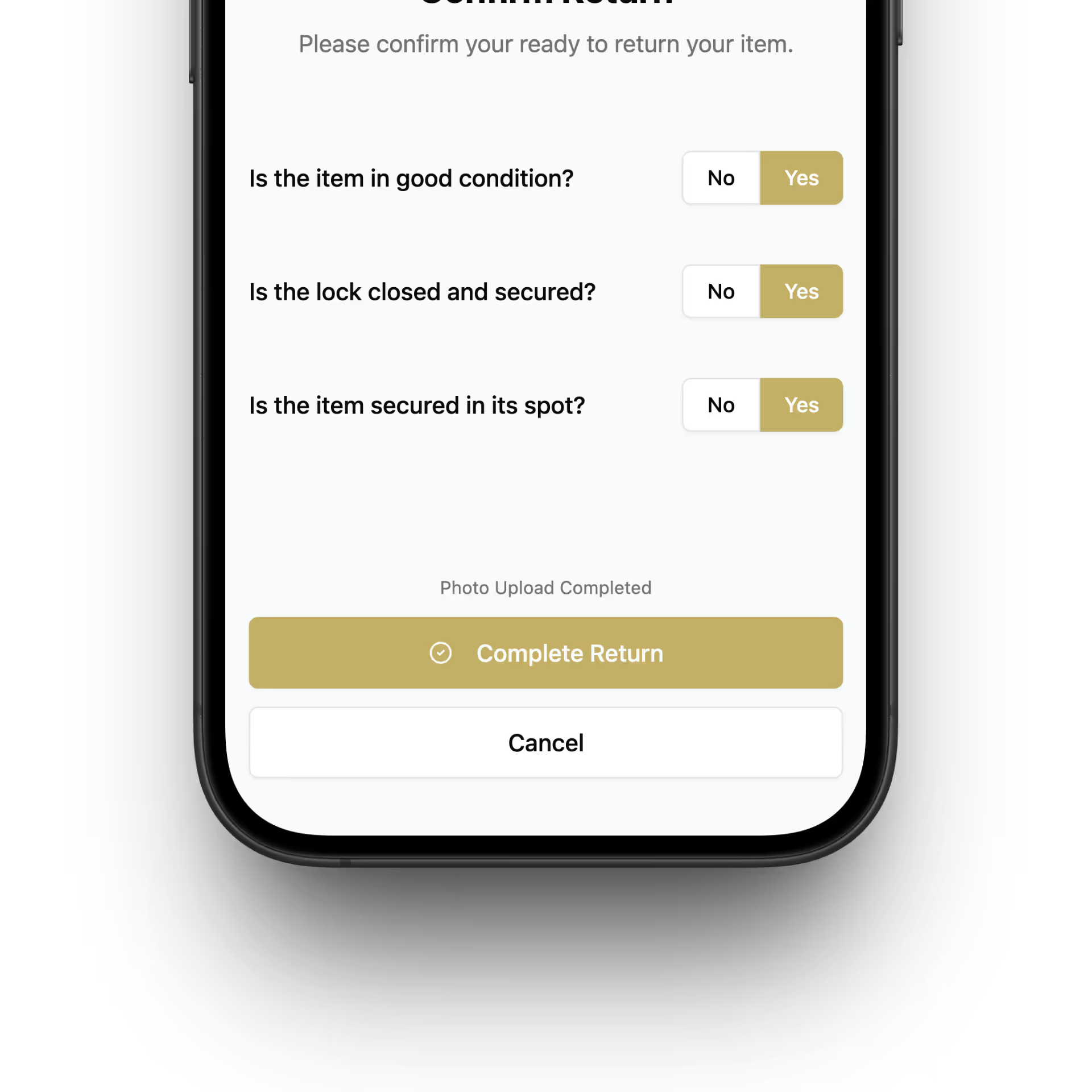
Customers upload condition photos on return, creating an audit trail.
The Bottom Line
Self-service rental technology is not just a cost-cutting exercise, it's a growth strategy. Operators who automate can reinvest savings into fleet expansion, marketing, and new locations.
70% Cost Reduction
Average operational cost savings across all surveyed businesses after 12 months of self-service operation.
24/7 Availability
Automated locations operate around the clock, capturing bookings that staffed locations miss entirely.
Methodology
This study surveyed 20 thousand bookings across Australia, the UK, and the United States between January and December 2025. Participants operated in trailer rental, bike rental, kayak and canoe rental, equipment rental, and studio rental. All had transitioned from staffed to self-service operations within the prior 24 months. Financial data was self-reported and validated against booking platform records where available.
Frequently asked questions
Any rental business where the handover process is relatively simple, trailers, bikes, kayaks, paddle boards, equipment, storage units, and studio spaces. If the item can be secured with a smart lock and the customer can collect it independently, self-service is a strong fit.
The upfront cost is typically a smart lock per item ($100-$200) plus software subscription. Most operators report break-even within 2-3 months through reduced staffing costs alone.
Our data shows yes. Customers rated self-service 4.7/5 compared to 3.9/5 for staffed. The key drivers are speed, convenience, and 24/7 availability, no waiting for business hours or staff availability.
Automated systems include fallback messaging, support chat, and operator notifications. Identity verification and GPS tracking create accountability. Operators report fewer disputes with self-service than with staffed handovers.
Yes. Identity verification, return photos, and GPS tracking provide strong safeguards. Several operators in this study rent out equipment worth $10,000+ using fully automated self-service.