
Dynamic Pricing FAQs for Rental Operators
June 29, 2026 · 9 min read
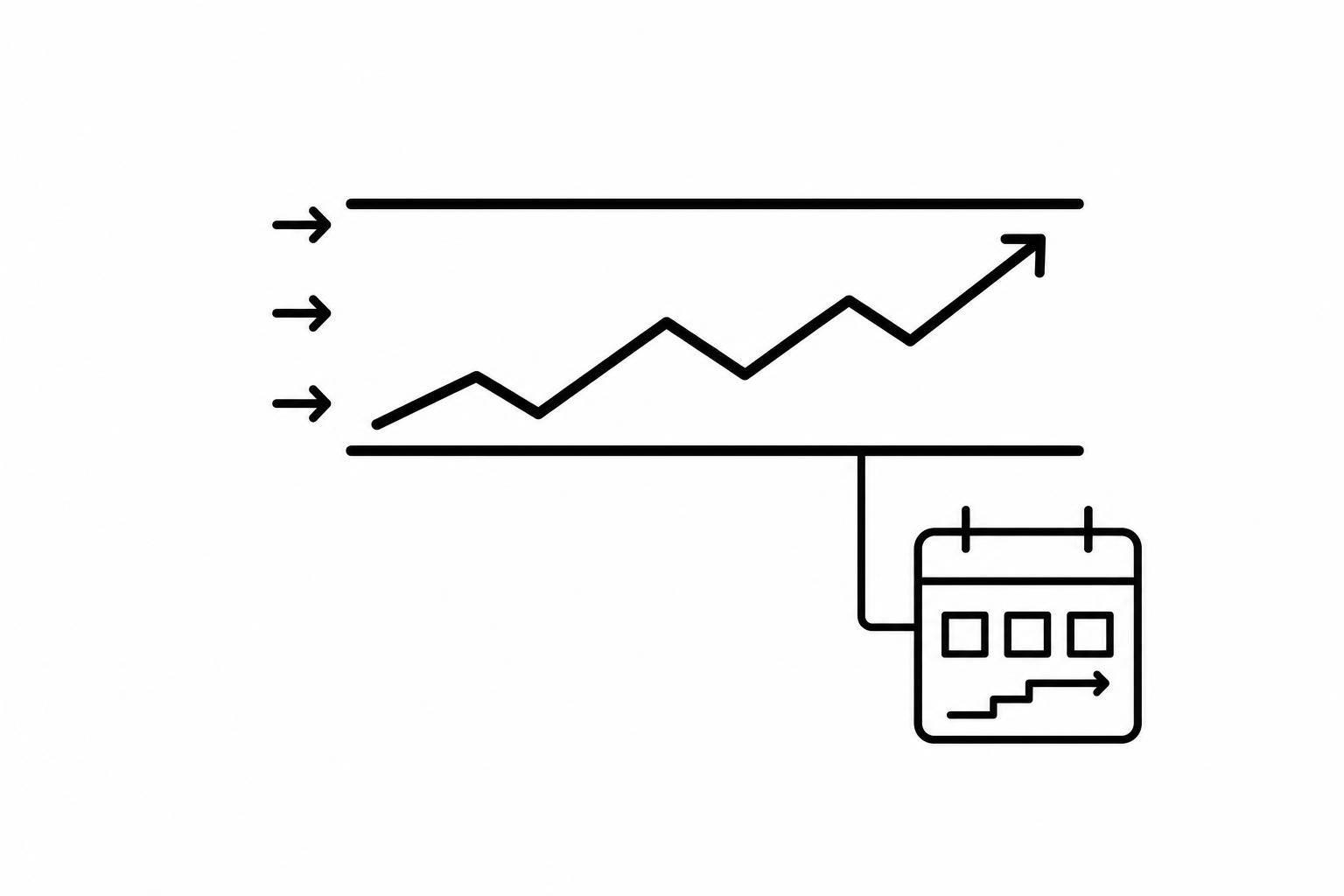
Dynamic Pricing FAQs for Rental Operators
Yes - dynamic pricing can make more money from the same inventory, but only if you set hard limits and track the right numbers. In the article, I see reported revenue lifts of 12%–25%, more reservations, and utilization gains like 61% to 78% after switching from one flat rate to rules-based pricing.
Here’s the short version:
- Dynamic pricing changes rates based on live demand, not just season or day of week.
- It tends to fit rentals with perishable time slots best, where an empty hour or day is lost once it passes.
- The main inputs are booking pace, inventory left, lead time, weather, holidays, and local events.
- To avoid margin loss, I’d use a base rate, a price floor, and a price ceiling.
- A safe starting point is often a ±10% band around the base rate, with daily changes capped at 5%–10%.
- Watch for common problems like rates dropping below margin, stacked discounts, customer confusion, and bookable slots your team can’t fulfill.
- To judge results, I’d focus on [RevPAR](https://en.wikipedia.org/wiki/RevPAR), [ADR](https://www.investopedia.com/terms/a/average-daily-rate.asp), booking pace, booking window, utilization, and net revenue - not bookings alone. Use rental software insights to track these metrics accurately.
- Review early and often: daily for the first 30 days, then twice a week through day 60, then weekly by day 90.
If I had to boil the whole piece down to one idea, it’s this: dynamic pricing works when prices move for a reason, stay inside fixed limits, and line up with inventory and staffing rules.
Dynamic Pricing Power-Up Workshop
When Dynamic Pricing Makes Sense
Dynamic pricing makes the most sense when demand changes enough that an empty day or hour is simply lost for good. You can’t sell yesterday’s unused rental slot tomorrow. But if demand stays flat and your calendar looks almost identical week after week, a dynamic system may not have much to do. At that point, the big job is figuring out which signals should move prices.
Demand Signals That Should Trigger Price Changes
The clearest triggers are the ones you can see coming: seasonality, weekends, holidays, local events, booking lead time, weather forecasts, and utilization thresholds [5][2][3].
For outdoor equipment, weather-based price changes usually work best when made 48–72 hours ahead [2]. That gives operators time to react before demand hits. It’s also common to increase rates before major conferences, holidays, and graduation weekends.
Booking pace and conversion rates matter too. If reservations are coming in faster than normal, demand is starting to outrun supply, and rates can move up. On the flip side, if inventory is still open 48–72 hours before pickup, lower prices can help fill those gaps before the window closes [5][2].
Some operators also use simple threshold rules. For example, prices may increase on their own once utilization hits 80% [3].
Rental Categories That Benefit Most From Dynamic Pricing
Dynamic pricing tends to work best for high-volume fleets with uneven utilization and for inventory that loses its earning power once the date passes [5][2]. That’s why vehicle rentals, equipment rentals, and micromobility are often a strong match, especially when demand shifts with weather, weekends, or local events [2][7][8].
By contrast, specialty items rented only once or twice a month usually don’t produce enough booking data to spot useful patterns. In those cases, fixed pricing may still make more sense [2]. The same often applies to corporate accounts with pre-negotiated contracts [2].
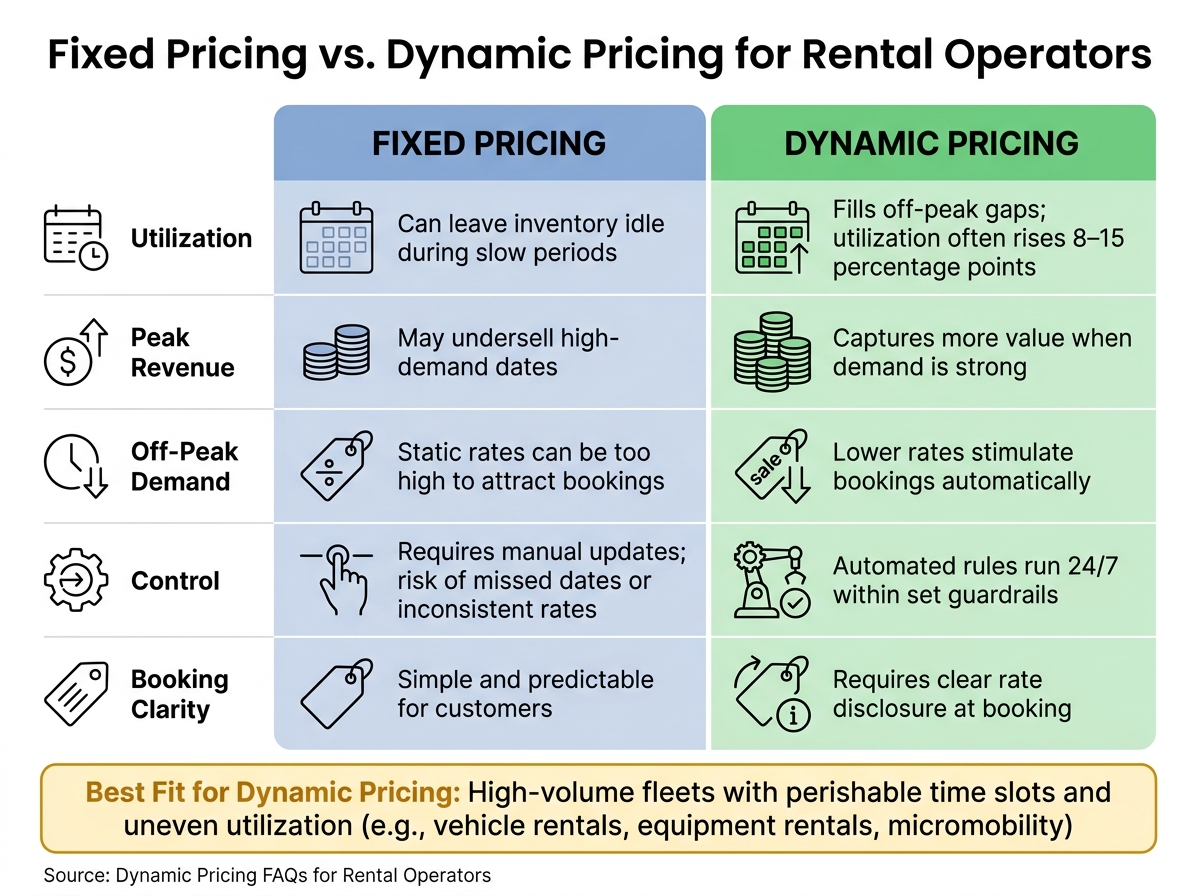
Fixed Pricing vs. Dynamic Pricing in Daily Operations
| Factor | Fixed Pricing | Dynamic Pricing | | --- | --- | --- | | Utilization | Can leave inventory idle during slower periods | Helps fill off-peak gaps; utilization often rises by 8–15 percentage points [2] | | Peak Revenue | May undersell high-demand dates | Captures more value when demand is strong | | Off-Peak Demand | Static rates can be too high to attract bookings | Lower rates can stimulate bookings automatically | | Control | Requires manual updates and can lead to missed dates or inconsistent rates | Automated rules run 24/7 within set guardrails , often as part of scaling with contactless models | | Booking clarity | Simple and predictable | Requires clear rate disclosure at booking |
Once the fit is clear, the next step is setting floors, ceilings, and rule limits.
How to Set Up Dynamic Pricing Without Losing Control
Start With Base Rates, Floors, and Ceilings
The safest place to begin is with three numbers: a base rate, a price floor, and a price ceiling. That gives you guardrails before you start changing prices.
Set your base rate using blended seasonal pricing. In plain English, that means your normal daily rate, not a peak-day price or a slow-day discount [6][1]. Your floor should come from your actual costs so you don’t eat into margin [5][4]. For equipment rentals, that includes per-unit costs like depreciation, maintenance, insurance, and storage [2]. Then set your ceiling high enough to catch peak demand without pushing customers away or causing backlash [2][5].
Keep the range tight at first. A ±10% band around the base rate is a solid starting point. After a full season of data, you can widen that band to 20%–30%, and it’s smart to cap daily price changes at 5%–10% [2]. Those limits help protect margin, while booking data shows you when to move inside that range. Once those boundaries are in place, you can use booking history to shape the rules.
Review Your Data Before Setting Rules
Before you write a single pricing rule, look at your actual booking history. The goal is simple: build rules from demand patterns you’ve seen, not from guesswork.
At minimum, review historical bookings, utilization, cancellations, no-shows, seasonality, maintenance downtime windows, and the actual turnaround time between rentals [5][4]. Utilization tends to be the strongest signal because it shows where rates need to move. If demand keeps filling up at the same rate, that’s telling you something. If gear sits too long, that tells you something too. Those patterns should shape your first pricing rules.
Common Risks and How to Prevent Them
Once your rules are live, the focus shifts to avoiding margin loss, customer confusion, and fulfillment mistakes.
Overpricing, Underpricing, and Rate Volatility
The two mistakes operators make most often are pretty simple: charging too much when demand jumps and cutting prices too hard when demand drops. Both can hurt. High prices can push customers away. Deep discounts can quietly chip away at your margin.
Set a hard floor to protect margin and a ceiling to avoid sticker shock. Keep the daily change limit at 5–10% as a volatility control [2]. That helps keep price shifts steady enough that customers don’t feel blindsided.
There’s another risk that can sneak up on you: stacked discounts. If your system applies an automatic discount and a promo code at the same time, the combined discount can pull the net rate below your floor. Put a rule in place that blocks that combo before it happens [5].
The next issue is clarity. Customers should see the full price before they book.
Keeping Pricing Clear for Customers
Customers are usually fine with dynamic pricing when the booking flow is clear. Show the current rate, minimum rental period, fees, and extension pricing before checkout. That matters even more in self-service rentals, where there’s no staff member standing by to explain the total.
Clear pricing on the front end only helps if the inventory behind it is ready to book.
Aligning Operational Rules With Pricing Rules
Pricing rules that don’t match your day-to-day operations can cause trouble fast. If your system prices a rental slot that your team can’t actually handle - maybe a unit is in maintenance, or there isn’t enough turnaround time between bookings - you end up with a reservation you can’t fulfill.
The practical fix is to tie pricing to live availability. Maintenance windows, prep time, and return inspection slots all need to be blocked before the pricing system offers that inventory. If the operational side isn’t locked down, a rate spike can turn into fulfillment issues and frustrated customers.
How to Measure Results and Refine Your Pricing Strategy
Metrics That Show Whether Dynamic Pricing Is Working
Once your pricing rules go live, measure them by margin and fill, not bookings alone. A full calendar can look good on paper and still leave money on the table. The better test is whether pricing is improving performance across each location, asset type, and season. That’s how you spot where your rules are helping - and where they’re dragging results down.
RevPAR (Revenue Per Available Rental) is the clearest single metric because it balances rate and fill. If occupancy is high but RevPAR is slipping, rates are probably too low. ADR (Average Daily Rate) shows whether booked rates are moving up or down. If ADR falls faster than occupancy climbs, your pricing rules need a tune-up [5].
Two other metrics deserve close attention: booking pace and booking window. Booking pace shows how fast inventory is filling compared with past periods. Booking window shows how far in advance guests are reserving. When dynamic pricing is set well, it can widen that window because guests start to see that booking early often gets them a better rate.
Fill only matters when the rate supports margin.
Track net revenue, not gross, after fees, cleaning, and taxes.
Review Pricing on a Set Schedule, Not Ad Hoc
After your first readout, stop reacting on the fly and move to a fixed review schedule. For new setups, review pricing daily during the first 30 days, twice a week from days 31 to 60, and weekly by day 90. That rhythm helps keep pricing tied to actual demand before drift turns into a bigger problem.
When you compare results, use the same period last year instead of the prior month. Month-over-month checks can throw you off because seasonality changes demand so much. It also helps to watch how often prices hit your floor or ceiling. If you’re landing on the floor a lot, your minimum may be too high for that time period, or demand may have softened [5].
Conclusion: Keep Pricing Flexible but Controlled
Dynamic pricing works best as a disciplined system, not a set-it-and-forget-it tool. The goal isn’t constant price changes - it’s better utilization and stronger margins.