5 Benefits of Self-Hire for Rental Businesses
January 21, 2026 · 9 min read
5 Benefits of Self-Hire for Rental Businesses
Self-hire systems are changing how rental businesses operate by automating bookings, pickups, and returns. Customers can handle the entire process digitally - anytime, anywhere - without staff involvement. This approach saves costs, simplifies expansion, and improves customer convenience. Key benefits include:
- Lower labor costs: Automates 95% of bookings, reducing staffing needs.
- Easier expansion: Operate multiple locations with minimal physical space and staff.
- 24/7 access: Customers can rent on their schedule, boosting revenue.
- Improved customer experience: Self-service options like digital locks and online portals make the process hassle-free.
- Streamlined operations: Automation handles tasks like identity verification, tracking, and maintenance.
Self-hire systems provide a scalable solution for rental businesses to grow efficiently while meeting modern customer expectations.
1. Lower Labor Costs
Labor costs are often one of the biggest expenses for rental businesses. In traditional setups, staff are needed to manage bookings, verify IDs, hand over equipment, process returns, and answer customer inquiries throughout the day. With self-hire systems, most of these tasks are automated, allowing businesses to run with fewer employees, effectively solving labour shortages.
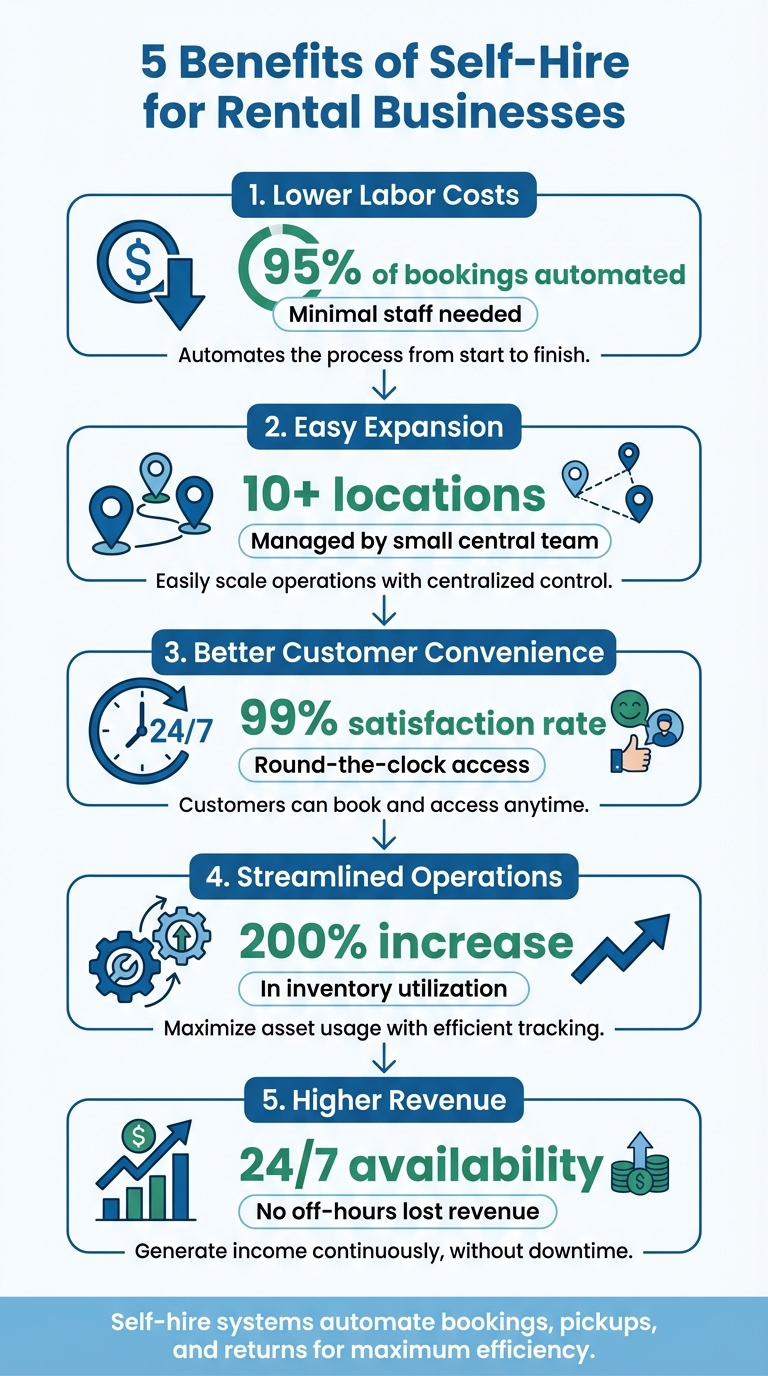
Automation takes over routine tasks, reducing the need for manual involvement. For example, 95% of customer bookings in self-hire systems are completed without any human intervention [1][3]. Features like digital locks, automated identity verification, and pre-programmed customer communications handle the bulk of transactions seamlessly.
This system allows staff to focus solely on exceptional situations, such as overdue returns, damage claims, or maintenance issues, rather than spending time on routine handovers. As Lockii puts it: "Let Lockii do the hard work and be notified when you're needed so you can focus on growing, not handing out stock" [1].
The savings go beyond wages. Without the need for traditional office spaces, businesses can set up satellite locations in small areas - like two parking spaces or a park corner - using contactless technology [2]. Maintenance teams can operate centrally, covering multiple locations, while customer service is entirely online.
Self-hire systems also make it easier to scale. Instead of hiring more staff, businesses can grow by expanding their inventory. Some companies successfully manage 10 or more locations with minimal staff oversight. By significantly cutting labor costs, self-hire systems free up resources that can be reinvested into growing the business.
2. Easy Expansion to Multiple Locations
Expanding a business traditionally involves hiring more staff and leasing larger facilities, which can slow down growth. Self-hire changes the game entirely. Instead of needing full-scale offices with restrooms and customer service areas, businesses can operate from compact spaces - think two parking spots or even a small park corner [2]. This streamlined approach drastically reduces the need for physical space and simplifies operations.
The real shift comes from automation, which eliminates the reliance on on-site staff. Companies using self-hire platforms often manage 10 or more locations [1], all overseen by a small central team rather than a large workforce spread across multiple sites. Features like digital locks and GPS tracking simplifies multi-location rentals and allows for remote management, enabling a single maintenance crew to handle multiple locations instead of being tied to just one.
By removing the need for staff facilities, businesses save on costly land purchases and long-term leases. A satellite location could be as minimal as a secure parking area equipped with GPS-monitored items and digital locks. Everything runs from a centralized dashboard, where one operator can oversee bookings, customer communication, and maintenance schedules for all sites.
This setup allows for rapid scaling. Growth is tied to inventory, not physical infrastructure. Businesses can quickly test new markets, add locations during busy seasons, and exit underperforming areas without being burdened by staffing or lease commitments.
3. Better Customer Convenience and Satisfaction
Self-hire isn't just about cutting costs or making expansion easier and more scalable - it’s also a game-changer for customer convenience. Unlike traditional rental setups that restrict operations to business hours, self-hire provides 24/7 access. Customers can book online, get automated access codes through SMS or email, and pick up their rental whenever it fits their schedule. Whether it’s 6:00 AM before heading to a job site or 11:00 PM after a long shift, they’re in control.
And the results speak for themselves. Businesses using automated self-service platforms report an impressive 99% customer satisfaction rate across all rentals [3]. Self-hire lets customers take charge of the entire process - booking, payment, pickup, and even extending their rental - all from their smartphone.
The technology behind this convenience is seamless. Digital locks create PIN codes that work only during the rental period, while QR codes and NFC tags enable immediate, on-site rentals. This is perfect for last-minute needs, where customers can browse, book, and check out - all without leaving their phone.
Automated communication keeps the process smooth and stress-free. Customers get booking confirmations, detailed pickup instructions, and return reminders, so they’re always informed. When it’s time to return the equipment, they can upload photos through a digital return form, leaving a clear record that protects both sides and adds peace of mind.
Self-hire also ensures access to well-maintained, up-to-date equipment without the headaches of ownership. This hassle-free experience encourages repeat business and word-of-mouth referrals, making it a win-win for both customers and businesses.
4. Streamlined Operations Through Automation
Automation takes the hassle out of repetitive tasks that often slow down traditional rental operations. Take identity verification, for example - automated systems handle this through online databases, eliminating the need for manual checks and reducing processing errors. Similarly, GPS tracking keeps tabs on equipment in real time, flagging overdue returns or potential issues without staff needing to step in. These tools save time and ensure every transaction is handled smoothly and consistently.
The rental return process also gets a major upgrade with automation. Customers can upload photos via digital return forms, creating a clear visual record of the equipment's condition - no staff inspections required. Maintenance tracking systems automatically log service schedules and mark items needing repairs, ensuring faulty equipment isn’t accidentally double-booked. Audit logs bring it all together by consolidating GPS data, identity verification, and return photos into a single, comprehensive record.
The impact is clear: businesses using these systems have reported a 200% increase in inventory utilization [3]. Why? Because automation keeps equipment tracked, maintained, and ready for customers when they need it.
Communication and order management also benefit from automation. Automated SMS and email updates handle booking confirmations, pickup instructions, and return reminders seamlessly. Customers can even extend their rentals or make payments instantly through a user portals, cutting out the need for phone calls or manual billing adjustments. Features like "Find my order" pages give customers quick access to their booking details, reducing the need for support.
This streamlined approach makes scaling across multiple locations much easier. Whether you’re managing two locations or twenty, each can operate independently with the same automated processes. The result? A rental operation that’s efficient, scalable, and allows your team to focus on what really drives growth. Up next, discover how offering 24/7 access can unlock even more revenue opportunities.
5. 24/7 Access and Higher Revenue Opportunities
Traditional rental businesses that operate only during standard hours often miss out on valuable opportunities. Imagine a customer needing a trailer at 6:00 AM or a bike at 10:00 PM - if the business is closed, that’s lost revenue. Self-hire systems completely change the game, allowing customers to book and pick up rentals anytime, day or night. This constant availability not only adds convenience for users but also opens the door to more revenue.
By extending operating hours, rental businesses can tap into demand during evenings, weekends, and holidays. With tools like digital locks and automated booking systems, early risers, night owls, and weekend adventurers can rent equipment on their own schedules. This flexibility turns what would’ve been idle equipment into steady income.
Self-service features also make it easy for customers to extend their rental periods and pay instantly through online portals. For example, QR codes placed on rental items can encourage spontaneous bookings from people passing by - no staff required. These seamless options not only enhance customer experience but also drive revenue with minimal effort.
The operational advantages are just as impressive. Automated systems handle tasks like identity checks and payment processing, meaning businesses can expand to new locations without needing to hire night-shift staff. Rentals can even operate in smaller, unstaffed spaces like parking lots or storage areas - places where traditional setups wouldn’t make financial sense. By cutting labor costs during off-hours, businesses can maximize every hour’s earning potential.
This model is especially effective for equipment and vehicle rentals where demand doesn’t stick to a 9-to-5 schedule. Whether it’s trailer rentals, bikes near outdoor hotspots, or tools for contractors, offering 24/7 access leads to more bookings, better equipment utilization, and steady revenue growth.
Lockii’s self-hire platform is a perfect example of this approach in action. With features like digital lock access, online payment systems, and self-service rental extensions, it ensures businesses can generate income around the clock.
Conclusion
Self-hire systems offer a game-changing approach to rental operations, delivering practical benefits that go beyond traditional methods. From reducing labor costs and streamlining daily tasks to enhancing customer convenience and generating revenue 24/7, these systems provide a level of efficiency and flexibility that’s hard to beat.
By removing the need for on-site staff and large office spaces, businesses can reallocate resources toward growth opportunities. Without the limitations of staffing, companies can easily explore new markets, scale operations, and adapt to growing demand with minimal financial risk.
For rental businesses looking to stay ahead, self-hire systems are more than just a convenience - they’re a smart move. Tools like Lockii combine key features such as digital lock access, embeddable booking widgets, GPS tracking, and integrations with platforms like Stripe and Zapier into one seamless solution. Whether you’re overseeing a single location or managing multiple sites, self-hire systems provide the framework for growth that’s both efficient and scalable. They’re not just a trend - they’re the future of rental business success.