
2026 Identity Verification Trends for Contactless Rentals
June 24, 2026 · 9 min read
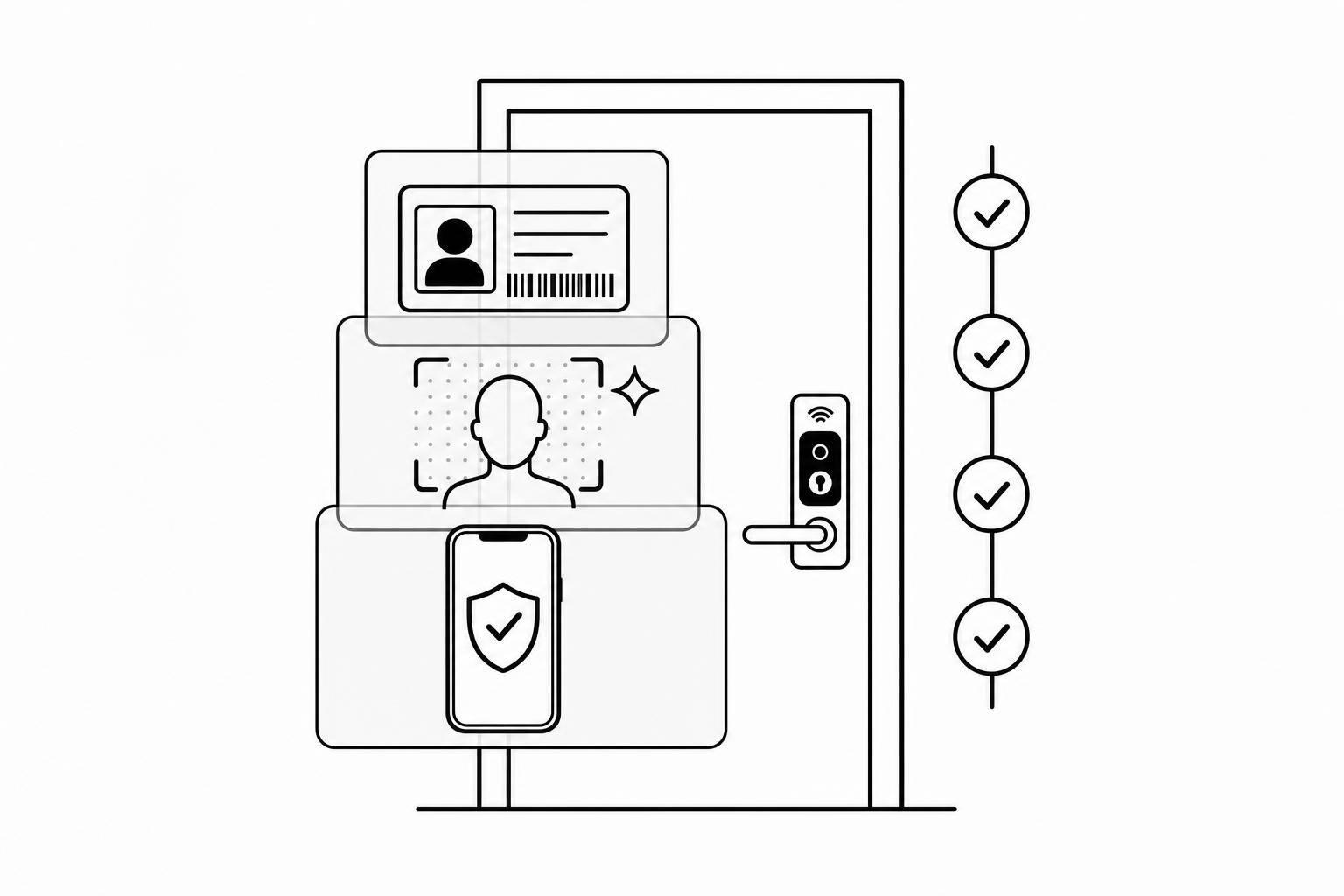
2026 Identity Verification Trends for Contactless Rentals
In 2026, ID checks are no longer just paperwork for contactless rentals - they control access. If I run a self-service rental business, I need to verify the renter _before_ pickup, not after, because fraud losses are high, deepfakes are getting through weak checks, and rules around ID records are tighter.
Here’s the short version:
- Static ID photos are not enough. AI deepfakes now bypass weak checks in 68% of fraudulent booking attempts.
- Fraud is expensive. Chargebacks can exceed $4,200 per incident, before damage, downtime, or other losses.
- Layered checks are now the standard. The main setup is:
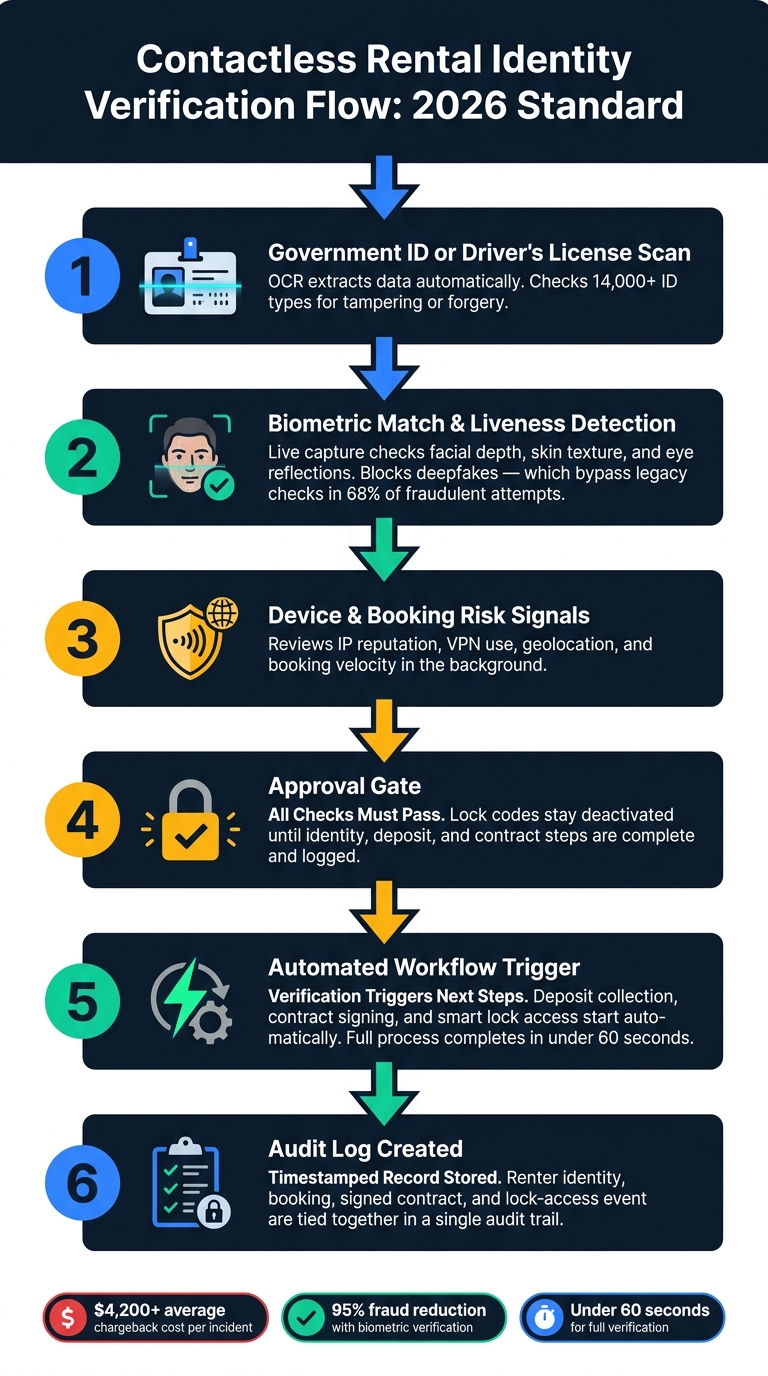
- ID or driver’s license scan
- selfie match with liveness check
- device and booking risk signals
- Access should stay blocked until all steps are done. That means ID check, payment or deposit, and contract records should be complete before lock release.
- Speed still matters. Many systems now finish checks in under 60 seconds, which helps keep pickup simple.
- Recordkeeping matters too. I need a clear log that ties the renter, booking, contract, and access event together.
What this means for me is simple: I should treat identity verification as part of the rental flow itself. It should decide approval, trigger next steps, and control whether a renter gets the code, app access, or lock release.
This article breaks down the main tools, the biggest 2026 shifts, and the steps rental operators should take now.
Why Identity Verification Is a Growing Concern for Self-Service Rentals
As contactless rentals grow, each remote pickup turns into a fraud checkpoint. For operators with more than one location, a single missed check doesn't stay small for long.
More Contactless Bookings Means More Remote Fraud Risk
Unattended rental models are easy targets because access is granted from a distance. Fraudsters now use synthetic identities: AI-generated faces mixed with fake government documents and stolen credit card data. On the surface, those profiles can look legitimate. By 2026, AI-generated deepfakes are reported to have bypassed legacy static verification systems in 68% of fraudulent booking attempts [1].
The cost adds up fast. Chargebacks now top $4,200 per incident for boutique operators, and that's before you factor in asset damage, downtime, or fines [1]. Stolen payment methods and unauthorized access can also lead to equipment or trailer use that voids insurance coverage. Lockii deals with this by keeping digital lock access turned off until identity verification is approved.
That shift is pushing operators to verify identity _before_ access is granted, not after the booking is already in motion.
Compliance and Digital Identity Rules Are Tightening
Fraud isn't the only issue. Rules around identity are getting stricter too. Since May 7, 2025, full enforcement of the REAL ID Act has pushed travelers toward stronger identity standards [2]. The TSA now supports digital ID at more than 250 airports across the U.S. [2], which helps make mobile-first verification feel normal for many travelers.
On the compliance side, operators also need a clear audit trail. Timestamped records that connect a verified identity to a booking, a signed contract, and a lock-access event can strengthen disputes and audits [3].
This matters even more for operators serving international travelers. Several European countries, including Spain, Italy, Portugal, and France, require guest registration and ID verification before access is granted [4].
So the booking flow is changing. Document checks, selfie matching, and device risk scoring are becoming part of the handoff before someone gets access.
The Main Identity Verification Technologies Shaping Rentals in 2026
In 2026, contactless rental verification usually runs through three layers: document checks, biometric match, and device risk scoring. As risk keeps climbing, more operators are moving to layered verification at booking time.
Document Checks, Driver's License Scanning, and Automated Data Extraction
When a customer books a rental online, document verification is usually the first gate. Modern systems use OCR to pull data from a government ID or driver's license and cross-check it automatically [6]. That cuts out manual data entry and spots mismatches before anyone touches the asset. It also lets operators confirm age or license eligibility before access is granted.
For vehicle and trailer rentals, a system can check whether the customer is allowed to rent that specific asset without a staff member reviewing the document. Document forensics tools can look for signs of tampering or forgery across more than 14,000 ID types [7]. That matters because fake documents are getting harder to spot with the naked eye. In a contactless flow, approval can happen before pickup instead of after a manual review.
Selfie Matching, Liveness Detection, and Biometric Verification
A document scan doesn't prove the person holding it is the person on it. That's where selfie matching and liveness detection come in. Liveness checks require a live capture, not a static image, which helps block spoofing and deepfakes. The customer completes a short live capture with motion, and advanced systems confirm identity by checking facial depth, skin texture, and eye reflections.
The fraud numbers here are hard to ignore. Biometric verification tools can reduce fraud by 95% and process users 50% faster than manual methods [3]. But there's no room to be casual with biometric data. Operators need consent, and the data must be encrypted, tokenized, and purged under the privacy rules that apply [1][4]. In an unattended pickup flow, the live face check becomes the final identity gate before access.
Device Risk Scoring and Lock-Access Triggers
Document and biometric checks help confirm who someone is. Device risk scoring looks at whether the booking behavior itself seems suspicious. Systems can review IP address reputation, VPN usage, geolocation, and booking velocity in the background [1][4]. So if someone makes a last-minute booking from an unrecognized device in a location that doesn't line up, the system can auto-approve, send the booking for review, or block it alongside the ID check.
In a contactless rental workflow, verified ID should trigger access automatically [2][3]. With Lockii, digital lock codes stay deactivated until verification passes, so the physical handoff is tied directly to the result. That turns verification into an actual access-control step, not just a box to check for compliance.
In 2026, the strongest systems make identity, risk, and access decisions inside the same booking flow.
The Key 2026 Trends Rental Operators Should Watch
Once these tools are in place, the next change is how operators use them inside live booking flows. This is where things start to matter day to day. These systems now affect approval speed, fraud checks, and how much of the rental process can run on its own.
Real-Time Verification Built into Online Booking
In 2026, automated ID and liveness checks run during booking and finish in under 60 seconds [4]. That changes the customer experience in a big way.
When verification happens at booking, customers can get next-step instructions before they arrive. That means fewer delays at pickup and less back-and-forth with staff. Approval and pickup instructions can move through a single flow, without manual review.
Rental-Specific Fraud Rules Are Replacing Generic Onboarding Logic
Operators are shifting to risk rules built for rental behavior, not broad onboarding use cases. These rules flag:
- Last-minute bookings
- High-value asset requests
- ID and payment location mismatch
- Suspicious device signals like VPN usage or unusual booking velocity [4]
This matters because rental-specific rules catch booking patterns that generic onboarding systems often miss.
Identity Verification Is Now Tied to Full Workflow Automation
The big shift isn’t verification by itself. It’s what happens right after approval.
Verification now triggers lock access, deposits, and contract generation automatically [5][2]. In other words, once a customer is approved, the rest of the workflow can start moving right away.
Lockii is built around this model. Identity verification connects directly to digital lock integrations, SMS and email automation, booking widgets, GPS tracking, and order audit logs. So a verified customer can complete pickup on their own, 24/7, across multiple locations.
Taken together, these trends favor operators that treat identity as part of the rental workflow, not as a separate checkpoint. By late 2026, biometric onboarding, real-time verification, and rental-specific fraud models have become standard, while digital identity wallets are still early-stage. The strongest operators treat verification as the start of the handoff, not a separate form.
How Rental Businesses Can Apply These Trends in 2026
Build Your Verification Flow Around Booking Risk and Asset Value
Once your fraud rules and verification tools are set up, the next move is simple: match the level of checking to the level of risk.
That’s how you keep self-service pickup fast without making access too loose.
For low-risk bookings, a document scan may be enough. For higher-value assets like trailers, vehicles, and equipment, use stricter checks such as liveness detection and forensic document analysis [1][3]. You should also send certain bookings into that higher-tier flow by default, including last-minute reservations, document mismatches, expired credentials, and address mismatches [1][2][5].
One rule should stay firm: don’t release lock codes until identity, deposit, and contract steps are finished and logged [1].
With Lockii, identity verification connects straight to smart lock access and booking audit logs. So access is released only after each required step is confirmed.
Measure Speed, Fraud Reduction, and Cost Savings
After the flow goes live, track whether it’s getting the job done. Is it faster? Is it safer? Is it cutting manual work and extra costs?
These KPIs help answer that.
| KPI | What to Measure | Target | | --- | --- | --- | | Speed | Time to access | Under 5 minutes [2] | | Efficiency | Manual reviews per 100 pickups | Below 5% [2] | | Fraud | Chargeback rate for first-time renters | Significant reduction | | Conversion | Pickup completion rate | No drop after adding biometric checks | | Compliance | Audit trail completion rate | Every booking logged |
When approval is done, the rest should happen automatically: release access, send the confirmation, store the contract, and update the booking log.
Those numbers tell you if your verification flow can handle more volume without adding friction.
Conclusion: The Main Identity Verification Changes Contactless Rental Operators Should Act On
In 2026, identity verification is the first checkpoint for deposits, lock release, and dispute handling in contactless rentals. A static ID check just doesn’t cut it anymore. Liveness detection, forensic document analysis, and device risk signals are fast becoming the baseline, not the premium add-on.
That shifts the job of verification. It can’t just confirm who someone is. It needs to control what happens next.
The practical move is to tie verification directly to the rest of the rental workflow. When approval automatically starts deposit collection, contract signing, and smart lock access - with each step timestamped and logged - the process gets much harder to game. One verified identity record that follows the renter through pickup, extension, and return helps close the gaps fraudsters go after. Lockii supports this model by linking verification, smart lock access, and booking audit logs across locations.
The action here is simple: U.S. operators should line up their workflows with REAL ID enforcement and FCRA record retention requirements [2][3]. Verify first, release access only after approval, and log every step.