
How GPS Tracking Reduces Trailer Insurance Costs
April 12, 2026 · 11 min read
How GPS Tracking Reduces Trailer Insurance Costs
If you’re tired of high trailer insurance premiums, GPS tracking might be the solution you need. Here’s why:
- Theft prevention: Trailers are prime targets for theft, but GPS tracking deters criminals and aids in quick recovery.
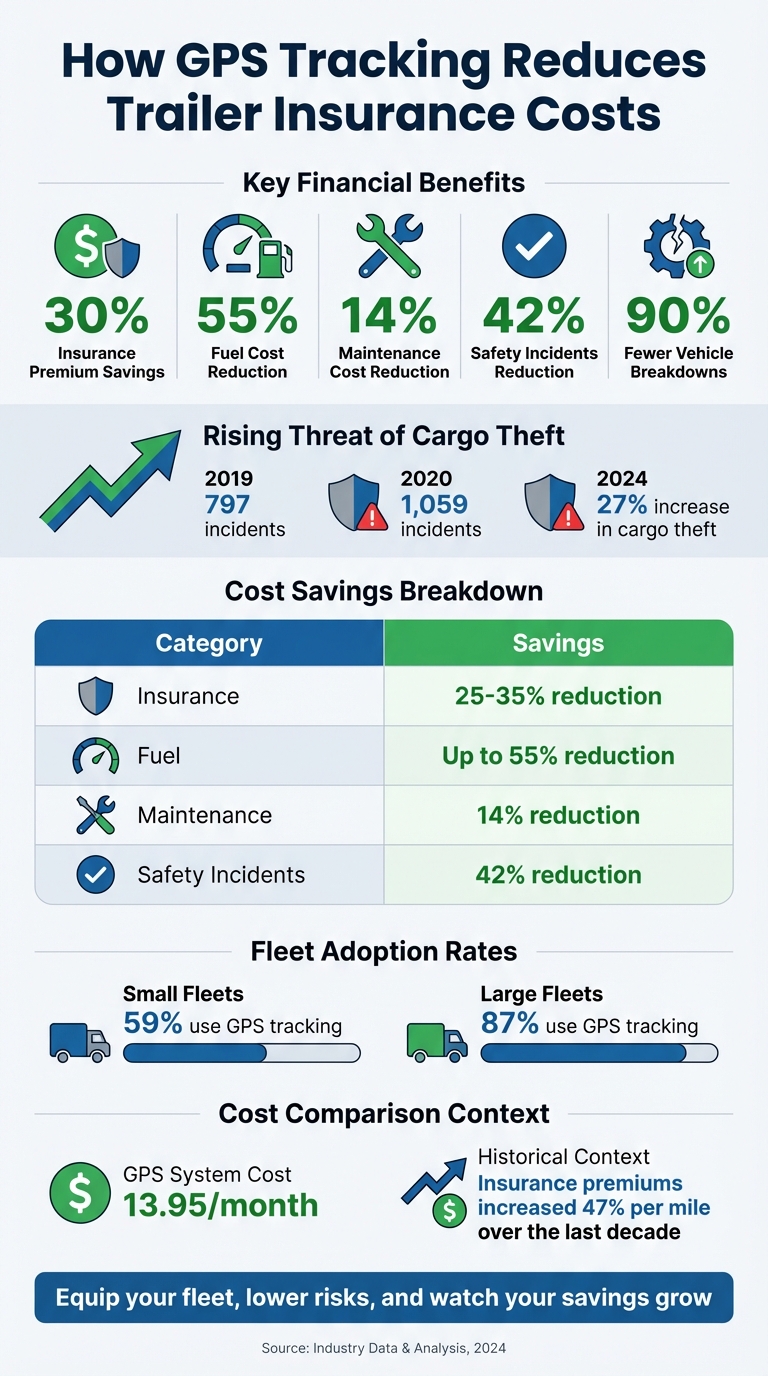
- Insurance savings: Businesses using GPS tracking can save up to 30% on premiums.
- Risk reduction: Monitor driving behavior, prevent misuse, and ensure trailers stay in approved areas.
- Faster claims: GPS data simplifies liability disputes, speeding up claims processing.
- Operational savings: Cut fuel costs by 55%, reduce maintenance expenses by 14%, and identify underutilized assets.
With cargo theft up 27% in 2024 and insurance premiums rising, GPS tracking isn’t just a tool - it’s a cost-saving game plan. Equip your fleet, lower risks, and watch your savings grow.
Track Your Car or Trailer with the Carlock Portable - REVIEW
Why Trailer Insurance Costs Are So High
Insurance premiums for trailers can feel like a heavy burden, but understanding the factors behind these costs helps shed light on the issue. Trailers often face unique vulnerabilities - like being left unattended in parking lots, remote job sites, or even customer driveways. Unlike vehicles with built-in security systems, trailers generally lack strong anti-theft measures, making them easy targets for opportunistic thefts. These risks force insurers to raise premiums, but advanced tools like GPS tracking can help mitigate the problem.
Common Risks That Increase Insurance Premiums
Theft and Cargo Loss Cargo theft is a persistent issue. Back in 2015, cargo thefts resulted in losses of nearly $28 million, with only $5 million ever recovered. Fast forward to 2021, and those losses climbed to over $12.7 million [8][9]. Trailers without sufficient security measures are particularly vulnerable, which drives up insurance costs.
Reckless Driving and Unauthorized Use Behaviors like speeding, harsh braking, and sharp cornering don’t just increase accident risks - they also lead to mechanical wear, making insurers wary. These actions are often seen as red flags, prompting higher premiums [7]. On top of that, unauthorized use of rented trailers, such as running personal errands or driving during off-hours, adds to the risk of damage and liability claims [5].
Liability Disputes Here’s an eye-opening stat: passenger cars are responsible for over 80% of crashes involving trucks and trailers [5]. Despite this, trailer operators often bear the blame. Mykael Korpash from One Step GPS highlights how this unfair blame can result in higher payouts for insurers. Technology, like GPS tracking, can provide evidence to clarify liability and reduce these costs [5].
Maintenance Neglect Skipping regular maintenance can lead to breakdowns or equipment failures, increasing the likelihood of accidents and costly insurance claims. Using a trailer rental safety checklist can help mitigate these risks. Insurers also charge higher premiums for rented trailers compared to owner-operated ones, as temporary users are often believed to take less care of the equipment [5].
How High Premiums Affect Rental Business Profits
These risks don’t just hurt insurers - they directly hit the bottom line for rental businesses. Over the last decade, insurance premiums have surged by nearly 47% per mile, creating a significant drain on profits [9]. For rental operators, insurance now represents one of the largest operational costs, rivaling even fuel expenses [9].
The problem is even worse for underutilized trailers. Without tracking data, these idle assets still rack up full insurance rates, further eating into profits [2]. For small- to mid-sized rental businesses, these high costs can mean the difference between growth and stagnation. Without tools to demonstrate safe usage and reduce risks, operators are often stuck paying premiums based on worst-case scenarios for their entire fleet. Solutions like GPS tracking can play a critical role in cutting these expenses and improving profitability.
How GPS Tracking Lowers Insurance Costs
Using GPS tracking can lead to lower insurance premiums by addressing theft, misuse, and liability concerns while providing solid proof of safe operations.
Preventing Theft and Recovering Stolen Trailers
One major advantage of GPS tracking is its ability to deter theft and assist in recovering stolen trailers. Knowing that a trailer is trackable often discourages thieves. As the Linxup GPS Team puts it:
"People are less likely to steal a vehicle that they know can be easily tracked. They'll generally move on, and look for an easier option." [4]
If theft does occur, real-time location tracking helps law enforcement recover the trailer quickly, reducing the chance of a total loss claim. Features like geofencing add another layer of defense by sending instant alerts when a trailer crosses predefined boundaries [2]. On top of that, advanced sensors can monitor door activity, offering extra security for your cargo [2].
Stopping Unauthorized Use and Misuse
GPS tracking also helps identify and prevent unauthorized or unsafe use of trailers. It can detect risky driving behaviors and unauthorized trips, which leads to a 42% reduction in safety incidents [2][3]. Geofencing ensures trailers stay within approved zones, and in some cases, advanced systems allow for remote immobilization if unauthorized movement is detected [10]. By demonstrating safe and controlled usage, businesses can build trust with insurers, leading to lower premiums.
Faster Claims Processing with GPS Data
GPS tracking doesn’t just prevent risks - it also simplifies the claims process. Detailed logs of routes, speeds, stops, and events like door openings or temperature changes provide clear evidence in case of disputes [6][2]. CF&P Insurance Brokers highlights this benefit:
"In the event of a dispute or claim, access to this data expedites claim resolution. It provides definite evidence of what happened, which can expedite the claims process and potentially lead to reduced liability." [6]
With comprehensive GPS reports, you can quickly supply proof to your insurance provider, clarifying liability and flagging fraudulent claims. These records can also verify that a trailer was parked securely during a reported incident, protecting your business from false accusations [6].
sbb-itb-eb44693
Financial Benefits of GPS Tracking
GPS tracking offers more than just theft prevention - it helps businesses save money in several key areas, including insurance premiums, fuel usage, and maintenance costs. When you consider the combined impact of these savings, the financial advantages become undeniable.
Insurance Discounts for GPS-Equipped Trailers
Insurance companies tend to reward businesses that take steps to lower their risk. By equipping fleet vehicles with GPS tracking, companies can often qualify for premium discounts ranging from 25% to 35% or more [5]. Some providers even offer discounts of up to 30% for small businesses that adopt telematics technology [4].
To secure these discounts, reach out to your insurance agent with the necessary documentation. This typically includes your vehicle identification number (VIN), details about the GPS model, installation records, and safety reports. Providing additional evidence, such as geofencing alerts or low-mileage reports, can further strengthen your case and potentially lead to greater savings.
Other Cost Savings Beyond Insurance
The benefits of GPS tracking extend far beyond insurance. Many fleets report significant reductions in operational expenses. For example, better route planning and idle time monitoring have led to a 55% decrease in fuel costs for some fleets [2]. Maintenance costs also drop - by about 14% - when businesses shift to proactive servicing based on real usage data instead of fixed schedules [5]. This approach can even cut vehicle breakdowns by up to 90% [5].
Another area where GPS tracking shines is asset management. By identifying underused trailers, you can reassign or sell them to reduce overhead. Implementing automated trailer rental systems also saves labor hours and simplifies record-keeping, further improving efficiency. These operational improvements not only trim costs but also enhance your risk profile, which could lead to even lower insurance premiums.
Calculating Your Return on Investment
To gauge the return on investment (ROI) for GPS tracking, compare the total savings - across insurance, fuel, maintenance, and labor - against the costs of the system. The hardware and monthly fees for GPS tracking typically run around $13.95 per month [5]. Add up your annual insurance discount, fuel and maintenance savings, labor reductions, and any additional revenue from better trailer utilization to see the full financial picture.
CF&P Insurance Brokers highlights the added value of GPS data in risk management:
"In the event of an accident, this data can be an invaluable source in establishing liability and reducing fraudulent claims. By actively employing GPS technology, you're taking proactive steps to minimize risks, which insurance providers greatly appreciate." [6]
For those starting a trailer rental business, the combination of a 30% insurance discount, 55% fuel savings, and 14% lower maintenance costs clearly demonstrates how GPS tracking can deliver a strong ROI.
| Cost Category | Potential Savings with GPS Tracking |
|---|---|
| Insurance | 25% to 35% premium reduction [5] |
| Fuel | Up to 55% reduction [2] |
| Maintenance | 14% cost reduction; 90% fewer breakdowns [5] |
| Safety Incidents | 42% reduction [2] |
These savings highlight why GPS tracking is more than just a tool for theft prevention - it’s a critical component of a cost-effective and efficient risk management strategy.
GPS Tracking as Part of Your Risk Management Plan
Integrating GPS tracking into your risk management strategy can significantly enhance how you protect your assets and reduce operational risks. When paired with regular maintenance schedules, driver training, and clear communication with customers, GPS technology becomes a key tool for improving security, streamlining operations, and ensuring compliance with regulations.
Using GPS Data for Maintenance and Compliance
One of the standout benefits of GPS tracking is its ability to monitor mileage and engine hours. This data lets you schedule maintenance based on actual usage, with automated alerts ensuring that no service is overlooked. This proactive approach not only prevents expensive breakdowns but also extends the life of your equipment.
Additionally, GPS systems help ensure your trailers meet legal requirements by providing real-time data and maintaining a documented record of compliance with safety standards. For example, logging mileage and engine hours in real time aids in meeting FMCSA regulations. As Nori Gale from WEX Inc. points out, "Drivers who know they're being monitored by GPS tracking devices are safer drivers" [12]. This increased awareness has been linked to a 20% reduction in accidents [12]. Beyond maintenance, these systems also improve transparency with customers, strengthening business relationships.
Building Customer Trust with GPS Tracking
Transparency is a cornerstone of customer trust. Sharing real-time location updates during a rental period eliminates the need for frequent check-ins and gives customers confidence in your service. Features like accurate arrival estimates and self-service tracking enhance their overall experience while also creating a clear record of trailer usage and movements [11].
Geofencing adds another layer of accountability by sending alerts if a trailer leaves a designated area. This is particularly valuable given the rise in cargo theft incidents in the U.S., which increased from 797 in 2019 to 1,059 in 2020 [2].
How Lockii Combines GPS Tracking with Automated Rentals
Lockii showcases how combining GPS tracking with automated rental business operations can further reduce risks and improve efficiency. For trailer rental businesses aiming to scale without adding staff or increasing overhead, Lockii offers an all-in-one solution that integrates GPS tracking with automated rental operations.
Lockii’s platform includes features like real-time GPS monitoring, digital locks, identity verification, and comprehensive tracking tools. It also provides automated alerts for maintenance, damage monitoring, and geofencing, all within a single system that manages your rental operations. With multi-location support and detailed audit logs, Lockii ensures you have complete oversight of your fleet. Plus, integrations with tools like IglooHome, Stripe, and Zapier allow rental businesses to grow while maintaining tight control over their assets. This approach is particularly appealing to insurance providers, who value its comprehensive risk management capabilities.
Conclusion
GPS tracking does more than just protect your trailers - it helps lower insurance costs and improves how your business runs. By cutting down on theft risks, encouraging safer driving habits, and offering solid data for insurance claims, GPS systems directly tackle the issues that often lead to higher premiums.
But the benefits don’t stop there. Companies using GPS tracking have seen notable drops in safety incidents and vehicle breakdowns thanks to proactive maintenance. These gains mean fewer claims, less downtime, and a fleet that operates more reliably, keeping your business moving forward. Plus, these operational perks work hand-in-hand with advanced rental management tools.
For trailer rental businesses looking to grow smartly, combining GPS tracking with automated rental management is a game-changer. Platforms like Lockii offer a complete solution, integrating GPS tracking, digital locks, identity verification, and maintenance monitoring. This all-in-one approach gives you full control over your fleet while cutting labor costs. With features like multi-location support and integrations with Stripe, IglooHome, and Zapier, you can expand your reach without increasing overhead.
59% of small fleets and 87% of large fleets already use GPS tracking [1]. And with cargo theft on the rise - jumping from 797 incidents in 2019 to 1,059 in 2020 [2] - the question isn’t whether to adopt GPS tracking, but how soon you’ll make the move. Reach out to your insurance provider today to explore GPS-related discounts and take the next step toward a safer, more profitable fleet.