
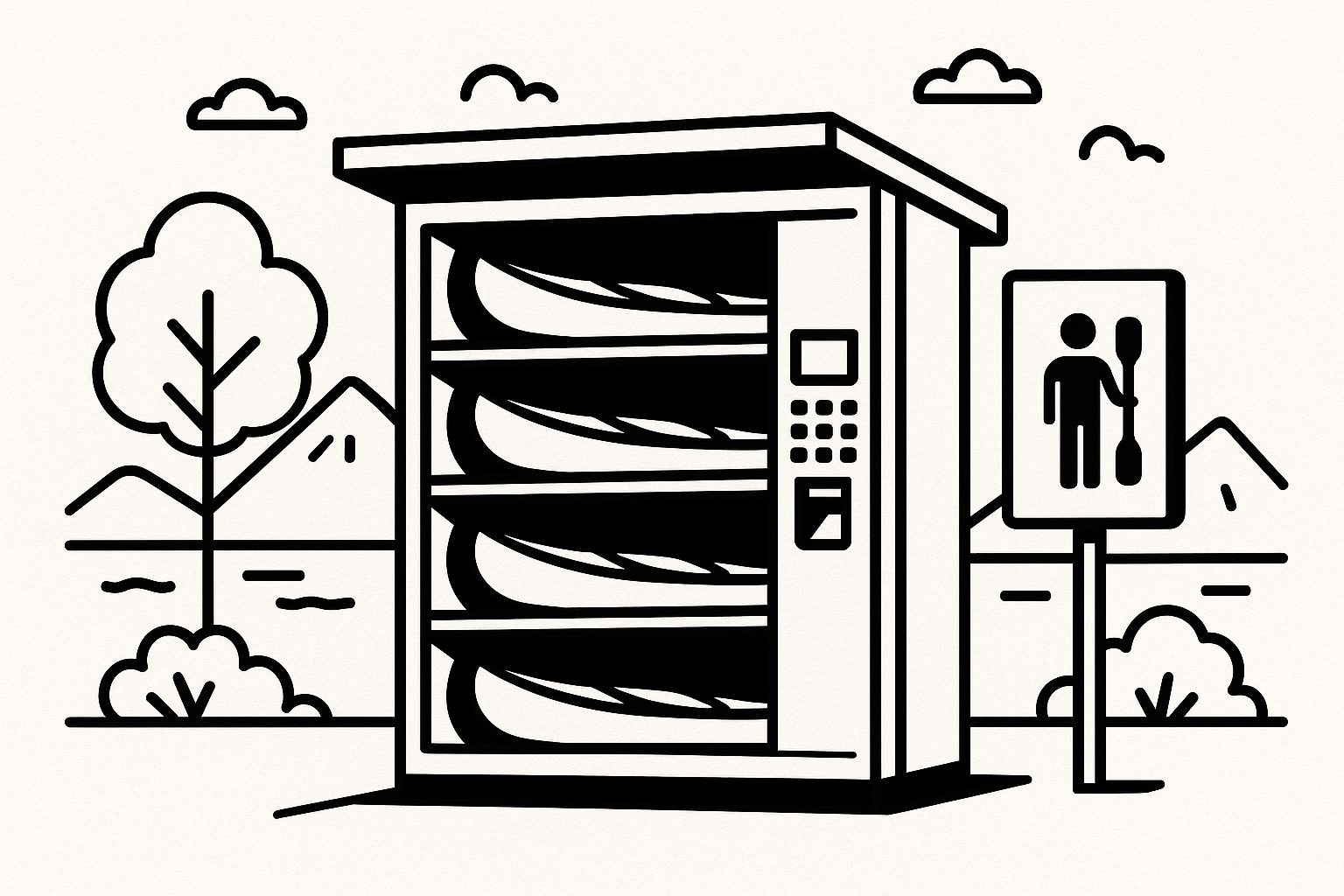
How to make your own self service Canoe Vending Machine
October 26, 2025 · 15 min read
How to make your own self service Canoe Vending Machine
With the right mix of hardware and software, you can create a self-service canoe rental system that operates round-the-clock, reduces labor costs, and offers convenience for customers. Here's the process in a nutshell:
- Hardware: Use weatherproof kiosks with digital locks, GPS trackers, and secure storage for canoes and equipment. Options include battery-powered or solar-powered units for flexibility in different locations.
- Software: Automate bookings, payments, and identity verification. Integrate features like QR code access, geofencing, and real-time tracking to simplify management.
- Security: Protect assets with GPS tracking, encrypted digital locks, and automated alerts for unusual activity.
- Location: Pick high-traffic spots near lakes or rivers to attract outdoor enthusiasts. Partner with local parks or private property owners to secure prime locations.
- Costs and Revenue: Initial setup costs include kiosks (starting at $8,100) and software subscriptions. Rental fees can generate up to $4,900 per month per system, with additional income from add-ons like merchandise or insurance.
This system is scalable, efficient, and designed to meet modern customer expectations while maximizing profitability. Keep reading for a step-by-step guide to setting up your own self-service canoe vending machine.
Is This The Future of Kayak Rental? Whenever Watersports
Required Components and Technology
Creating a reliable self-service canoe rental system requires a combination of sturdy hardware and smart software to ensure a smooth customer experience. The system must manage everything from secure storage to payment processing while being tough enough to handle outdoor conditions.
Hardware for Canoe Storage and Access
The backbone of a self-service canoe rental system lies in its storage and access setup. At the heart of this system are kiosks that securely house canoes and related equipment. These kiosks come in different sizes and configurations to match the needs of various locations and business scales.
Take Outdoor Vending Solutions, for example. They offer modular rental kiosks designed specifically for canoe storage. Their 4-place unit is priced at $8,100, while larger options, like the 8-place unit, cost $11,500, and the 12-place configuration is available for $14,100[1]. Each kiosk includes lockers for paddles and personal protective gear, along with racks to keep watercraft secure.
Whenever Watersports offers a slightly different solution with battery-powered kiosks that don’t require external power. These systems use Bluetooth-enabled locks and come in configurations ranging from 4 to 12 slots. They can be installed on diverse surfaces, including sand, grass, cement, and asphalt, making them suitable for various waterfront environments[3].
Access control is another critical feature of these kiosks. Many modern systems rely on touchscreen interfaces or QR code scanners for customer interaction. For instance, WEIMI’s rental vending machines use touchscreens to simplify the rental process[2]. Similarly, Rent.Fun provides stations where customers can unlock equipment by scanning QR codes through a mobile app[4].
To expand functionality, Outdoor Vending Solutions also offers optional remote management services for $950 and solar power add-ons for $900, making it easier to operate in areas without consistent electricity[1].
While sturdy hardware ensures security and accessibility, the software plays an equally important role in managing operations.
Software and System Integrations
The software behind self-service rental systems automates the rental process from start to finish. Platforms like Lockii offer 24/7 contactless rentals using digital locks, integrate payment processing through tools like Stripe, and provide real-time tracking for equipment.
Identity verification is often built into the software to streamline the booking process and ensure a smooth pickup experience. Additionally, GPS tracking enhances security by allowing businesses to monitor equipment in real time, set geofence alerts, and recover lost items if needed.
Payment systems are designed to handle various rental pricing models - hourly, daily, or multi-day - while automating calculations. Communication features, such as SMS and email, keep customers informed with booking confirmations, pickup instructions, return reminders, and safety tips. Customers can even extend rentals directly through the system.
To enhance customer convenience, many platforms offer embeddable booking widgets and mobile apps. These tools let users manage their rentals, scan QR codes for access, and receive real-time updates, creating a seamless rental experience.
Security and Compliance Requirements
Beyond the hardware and software, robust security and compliance measures are essential to protect both assets and customer data. Kiosks are designed to withstand tough weather and deter vandalism. Digital locks replace traditional keys, minimizing the risks of loss or duplication. These smart locks use encrypted communication and can be managed remotely to grant or revoke access instantly.
Data security is another critical factor. Payment processing systems must comply with PCI standards, and customer information should be encrypted and stored securely. Audit logs for transactions and equipment access are vital for regulatory compliance and insurance purposes.
Insurance and liability often require additional safety measures. Some systems include features like end-of-rental quizzes or photo documentation of equipment conditions to ensure customers are aware of safety protocols.
Local regulations may also dictate specific permits, safety standards, or operational procedures. The system should be flexible enough to meet these requirements without compromising functionality.
Fraud prevention is another key focus. Identity verification, payment authentication, and real-time equipment tracking help detect unusual activity, such as extended rentals or equipment being taken outside designated areas. Alerts can be triggered automatically for further investigation, ensuring both security and peace of mind.
Step-by-Step Setup Guide
Setting up a self-service canoe rental system takes thoughtful planning and execution across three key phases. From selecting the ideal location to installing the right technology and organizing daily operations, each step brings you closer to running a successful automated rental business.
Selecting Your Location
Start by identifying a waterfront location that offers easy access and attracts outdoor enthusiasts. Look for areas near lakes, rivers, or bays that are popular for recreation - think parks, picnic spots, or designated launch areas. These high-traffic zones naturally draw visitors who are ready to rent canoes [4] [5] [6] [8] [9] [10]. Tourist-friendly regions or locations near natural attractions like monuments or snorkeling sites are especially promising.
To secure the best spots, consider partnering with local parks departments, tourism boards, or private property owners. This can help you navigate local safety regulations, operating hour restrictions, and other requirements [1] [4] [6] [7]. Choose a site that fits your setup needs, whether it’s a mobile trailer, a fixed rack by the water, or a central storage hub. Also, keep future growth in mind when evaluating potential locations [1] [5].
Installing Hardware and Configuring Software
Once you’ve secured your location, it’s time to set up the hardware and software. Install rental kiosks according to the manufacturer’s guidelines. If you’re using battery-powered units, you’ll avoid the need for electrical hookups, while solar-powered kiosks should be positioned to get maximum sunlight. Make sure the kiosks are securely anchored and weather-resistant.
On the software side, configure your platform to handle all rental operations. This includes setting up an inventory system to track canoe details like serial numbers, capacity, and condition. Establish automated pricing for different rental durations, and thoroughly test the payment system to ensure it works smoothly and meets PCI compliance standards.
Next, program digital locks with unique codes that sync with your booking system. Test the connection between the software and locks to ensure codes activate and expire correctly. Set up backup access methods in case of technical issues.
Equip each canoe with GPS trackers and define geofence boundaries to monitor their location. Configure alerts for any equipment that moves outside these areas. Additionally, set up automated customer communication tools, such as SMS and email templates, for confirmations, instructions, reminders, and safety tips. A self-service customer portal can also allow users to extend their rentals easily.
With your hardware and software in place, you’re ready to deliver a seamless rental experience.
Setting Up Daily Operations
Your integrated system of digital locks and communication tools forms the backbone of a smooth rental process. Customers can book canoes through your website or app by providing their ID and payment details. Upon arrival, they can scan a QR code or use NFC technology to unlock the equipment, receiving access codes and pickup instructions automatically.
GPS tracking kicks in as soon as a canoe is in use, allowing you to monitor rentals in real time. Automated reminders let customers know when their rental period is nearing its end, and they can extend their time through the app if needed. Returns are confirmed using sensors or photo verification to ensure canoes are securely placed in designated slots.
Daily maintenance routines are essential to keeping everything running smoothly. Inspect canoes for any damage, check digital locks for proper function and battery life, and clean paddles and life jackets. Regular software updates and inspections will help maintain reliability.
To optimize your operations, use performance monitoring tools to track metrics like equipment usage, customer satisfaction, and turnover rates. This data can guide pricing adjustments, improve the customer experience, and inform plans for future expansion. In this self-service model, staff focus on maintenance, customer support, and troubleshooting rather than handling rentals directly.
sbb-itb-eb44693
Costs and Revenue Analysis
Once you’ve got your automated hardware and software in place, the next step is breaking down costs and revenue streams. Understanding how much you’re spending and where your income is coming from is key to making your operation successful. With the right planning, automated rental systems can be highly profitable.
Startup and Operating Expenses
Your initial expenses will cover hardware, software, and installation. Hardware costs include items like digital locks for each canoe, GPS trackers, weather-resistant kiosks or storage units, and the tools needed for installation. For example, Lockii charges $12 per month per locked item, which includes features like booking tools, identity verification, GPS tracking, and automated messaging.
On the operational side, you’ll need to budget for software subscriptions, insurance, connectivity, electricity, maintenance, and potential equipment upgrades. Annual operating costs for canoe rental businesses typically range from $34,000 to $109,500, but self-service systems can significantly cut these expenses [7]. Your specific costs will depend on factors like fleet size, location, and the level of automation you choose. Keep in mind that seasonal changes can affect your expenses, especially during peak times when equipment may require more maintenance due to heavy use.
To manage costs effectively, consider buying inventory in bulk for savings of 10% to 20%, investing in durable equipment to reduce repair costs, and shopping around for the best insurance rates. Focusing on high-traffic locations - those with at least 75 visitors daily - before expanding can also help you get the most out of your investment [11].
Revenue Streams and Pricing Models
Your main source of income will be rental fees, which can be structured as hourly, half-day, full-day, or multi-day rates. Operating 24/7 with an automated system allows you to maximize your earning potential.
A well-placed self-service system can generate up to €4,500 ($4,900) per month and handle up to 60 bookings per day [12]. Even in moderate-traffic areas, you can break even with as few as two rentals per day, making profitability achievable [12].
Secondary revenue streams can further boost your earnings. These might include selling waterproof phone cases, snacks, drinks, or branded merchandise through your automated kiosks. You can also offer premium services like equipment insurance for an extra fee.
Your pricing should reflect local demand and seasonal trends. During peak seasons, rates can be 50% to 100% higher than in the off-season. Membership programs and loyalty discounts are another way to encourage repeat customers and create a steady flow of income.
Here’s an example of the potential profits: If your system handles 10 rentals per day, you could see around €3,300 ($3,600) in monthly operating profit before tax. Over a 100-day peak season, that’s about €10,780 ($11,700) [12]. These figures show how automated systems can deliver strong financial results while setting the stage for improving customer experience and security.
Self-Service vs. Staffed Operations Comparison
Choosing between self-service and traditional staffed operations can have a big impact on your business model and profitability. Here’s a comparison of the two approaches:
| Aspect | Self-Service Operations | Staffed Operations |
|---|---|---|
| Operating Hours | 24/7 availability for maximum revenue | Limited to staff hours (8–12 hours/day) |
| Labor Costs | Minimal ongoing staff expenses | High payroll and related costs |
| Startup Investment | Higher initial tech and equipment costs | Lower upfront costs, higher ongoing costs |
| Customer Experience | Convenient, instant access via digital tools | Personalized service with local expertise |
| Scalability | Easy to expand to new locations | Requires hiring and training staff |
| Profit Margins | Around 50% with proper setup [12] | Typically 10–20% due to labor costs [7] |
| Maintenance | Automated monitoring with periodic checks | Continuous oversight required |
| Revenue Predictability | Consistent automated income streams | Variable, depending on staff performance |
Self-service systems stand out for their efficiency and scalability. Without the costs tied to wages, benefits, or scheduling, profit margins can reach about 50%, compared to the 10–20% typical of staffed operations [7][12]. Plus, automated systems can operate during high-demand times like early mornings, evenings, and weekends - hours when traditional rental shops are often closed.
On the other hand, staffed operations offer a personal touch. Employees can provide local knowledge, safety tips, and even upsell additional services. However, these benefits come with higher labor costs and added complexity in managing operations.
Best Practices for Security and Customer Experience
Running a self-service canoe rental business means finding the right balance between keeping your equipment secure and creating a smooth, enjoyable experience for your customers. Your system should protect your assets while making the rental process simple and accessible.
Security Measures and Fraud Prevention
Security is the backbone of your operation. Start by choosing well-lit, busy areas for storing your canoes. Adding weatherproof security cameras and motion-activated lights at key access points can further deter theft.
Digital locks are essential for preventing unauthorized access. Lockii’s system generates unique, time-sensitive access codes, ensuring only authorized users can unlock the equipment. Plus, it logs every access attempt, giving you a clear record for added peace of mind.
GPS tracking is another powerful tool. By installing discreet, waterproof GPS trackers inside the canoes, you can monitor their location in real time and recover stolen items more easily.
To reduce the risk of fraudulent rentals, require renters to upload a government-issued ID and a selfie for identity verification. This step ensures accountability and creates a record of who used the equipment, which can help resolve theft or damage disputes.
Remote monitoring adds another layer of protection. Automated alerts for failed access attempts, late returns, or unexpected GPS movements allow you to respond quickly. A damage deposit system that automatically deducts funds for unreturned or damaged equipment can also encourage responsible use and cover repair costs.
These security measures not only protect your equipment but also lay the groundwork for a smooth and reliable customer experience.
Improving Customer Experience
Security is important, but a user-friendly experience is what keeps customers coming back. Start by providing clear, visual instructions for every step of the process - from unlocking the canoe to returning it. Use large, easy-to-read text and detailed images to eliminate confusion.
Your booking system should be simple and mobile-friendly. Lockii’s embeddable widgets make it easy for customers to check availability, select rental durations, and pay - all without leaving your website. Automated confirmation emails with pickup instructions and access codes help make the process seamless.
Reliable customer support builds trust. Automate SMS and email updates to keep customers informed about pickup times, safety tips, and return procedures. For urgent issues, offer a monitored phone line during peak hours to ensure quick assistance.
Streamline the pickup process with QR codes or NFC technology. Customers can simply scan a code on their phone to access rental details and unlock their canoe - no need to remember or manually enter access codes.
Allow customers to extend their rentals through your portal, with payments processed instantly. This convenience not only improves their experience but can also increase your revenue. Adding a detailed FAQ section to your website can further enhance the experience. Cover topics like rental procedures, safety guidelines, weather policies, and even local paddling routes or parking tips to provide extra value.
Equipment Maintenance and Business Expansion
Once your security and customer experience are in place, focus on maintaining your equipment and planning for growth. Regularly inspect canoes, paddles, and safety gear for wear and tear. Set up a maintenance routine that includes cleaning, checking hulls for cracks, and tightening hardware to avoid unexpected issues.
Use your rental management system to track usage and maintenance needs. Lockii’s audit logs can show you which canoes are rented most often, helping you identify high-use items that may need extra attention.
Weather monitoring is crucial for both safety and equipment care. Automated systems can suspend rentals during unsafe conditions like storms or high winds, and you can provide clear rescheduling options to keep customers informed.
If you’re ready to expand, look for high-traffic locations where demand will justify the investment. Use data from your current operations to identify peak rental times and seasonal trends to guide your decisions.
Standardize your processes across all locations. Consistent procedures for equipment setup, customer communication, and maintenance schedules will ensure quality and make it easier to train new staff as you grow.
Finally, consider partnerships with nearby businesses like hotels, campgrounds, or outdoor gear stores. These collaborations can provide secure storage options and help you reach more potential customers through revenue-sharing agreements. With Lockii’s multi-location support, you can oversee all your sites from one dashboard - tracking equipment, bookings, and revenue across your network for efficient scaling.
Conclusion: Key Points for Building Your System
This guide has broken down the critical elements of setting up a self-service canoe rental system. By implementing a self-service canoe vending machine, you can turn your rental operation into a 24/7 automated business that generates revenue around the clock. The secret lies in blending the right hardware - like weatherproof storage units, digital locks, and GPS trackers - with software that seamlessly handles bookings and payments.
The process starts with choosing a high-traffic, secure location. From there, the technology stack you select, particularly the automated platform, will play a big role in how efficiently your system operates and how easily you can expand.
Although hardware costs can vary, automation helps cut staffing expenses and enhances return on investment. Flexible pricing models, such as charging a flat rate for each locked item (e.g., $12 per month), can make scaling your business financially sustainable. This streamlined approach not only increases your profits but also sets the stage for growth across multiple locations.
Focusing on a user-friendly experience is equally important. At the same time, a solid security setup - complete with GPS tracking and real-time alerts - keeps your assets safe while ensuring smooth day-to-day operations.