
How to create a franchisable rental company
Learn how to build a scalable rental franchise with standardized systems, technology, and strong support for franchisees, ensuring consistent customer experiences.
Creating a rental business that can scale through franchising requires consistent systems, automation, and data-driven planning. Here's how to set up a successful franchise model:
- Standardized Systems: Ensure all locations follow the same branding, customer service protocols, and operational procedures. This builds trust and delivers a uniform customer experience.
- Technology and Automation: Use centralized platforms to manage bookings, payments, and inventory. Automation reduces labor costs and ensures 24/7 service through contactless systems.
- Strategic Location Planning: Select locations using data analysis, focusing on areas with high rental demand and opportunities for clustering to maximize efficiency.
- Franchisee Support: Provide thorough training, shared resources, and ongoing assistance. Equip franchisees with tools to monitor performance and maintain quality.
Fireside RV Rental: Turning Unused RVs into Profits with Garr Russell

Core Requirements for a Franchisable Rental Business
Building a rental business that thrives as a franchise takes more than just offering a quality product or service. It requires a foundation of consistent systems that deliver the same high-caliber experience to customers, no matter the location. Let’s explore how unified systems and technology play a critical role in franchise success.
Unified Branding and Support Systems
At the heart of a strong rental franchise lies centralized branding and support systems. Consistency in branding is key to earning customer trust, which fuels repeat business and positive word-of-mouth.
To succeed, you need to tightly control critical customer touchpoints. From branding guidelines to service protocols and quality standards, every location must operate under the same playbook. This ensures customers have a reliable experience, no matter where they interact with your brand.
Centralized support systems also empower franchisees. Instead of each location trying to solve marketing, customer service, or operational challenges on their own, they can rely on established, proven systems. This not only simplifies operations for franchisees but also keeps costs down while maintaining the brand standards customers expect.
The Risks of Decentralized Operations
When franchise locations operate independently, the brand’s reputation can take a hit. A single bad experience at one location can ripple through and harm the entire network.
Inconsistent customer support is a major issue with decentralized operations. A customer might have an excellent experience at one location but a disappointing one at another. This inconsistency confuses customers and weakens the trust needed to build a strong brand identity.
Decentralized systems also come with higher operational costs. Each location must handle its own hiring, training, billing, and problem-solving, which leads to inefficiencies and duplicated efforts. Training becomes a particular pain point - without standardized procedures, each location develops its own methods, resulting in uneven service quality. This lack of consistency makes scaling the franchise much harder.
The Role of Technology in Franchise Growth
Technology is the linchpin for creating the standardized systems that rental franchises need to grow. It ensures consistency across locations while simplifying operations and reducing errors.
With the right technology, rental franchises can automate many processes, from equipment rentals and payments to customer support. This automation ensures a seamless and uniform experience for customers, regardless of the location they visit. It also lowers labor costs, allowing franchisees to operate profitably even in smaller markets.
Technology platforms tailored for rental businesses provide the infrastructure needed to manage multiple locations effectively. These systems handle everything from inventory tracking and customer communications to billing and performance reporting. Franchisees benefit from ready-to-use tools without having to invest in or maintain complex systems themselves.
Take Lockii's platform, for example. It’s designed specifically to tackle the challenges of running multiple rental locations. By automating processes and streamlining customer interactions, Lockii ensures centralized control over branding and customer experience. At the same time, it equips franchisees with the tools they need to operate efficiently and profitably.
Lockii’s integrated system also generates valuable data insights. Metrics like customer behavior, equipment usage, and operational performance across locations help franchisors and franchisees make smarter decisions. This data-driven approach strengthens operations and identifies opportunities for growth, setting the stage for long-term success in the rental franchise space.
Setting Up Contactless, 24/7 Rental Systems
Contactless rental systems let customers rent equipment anytime, without needing face-to-face interaction. This not only improves convenience but also boosts efficiency and customer satisfaction. For franchises, these systems are essential to maintaining consistent operations across locations. Let’s explore the technologies and automation that make these systems work.
Key Technologies for Contactless Rentals
The foundation of a smooth contactless rental experience lies in digital key access and mobile apps. These tools allow customers to unlock and manage rentals directly from their smartphones. Technologies like NFC, Bluetooth, and biometric authentication eliminate the need for physical keys altogether. On the staff side, mobile agent apps simplify tasks like checkouts, inspections, collecting digital signatures, and processing payments remotely.
Online booking and payment systems complete the process. Customers can browse available inventory, make reservations, and securely pay - all from a digital platform. Many of these systems also include identity verification and GPS tracking, which help ensure secure transactions and allow for real-time monitoring of equipment. Features like QR codes and NFC technology bridge the gap between digital reservations and physical pickups, making the process even more seamless.
How Automation Reduces Costs
Automation plays a key role in cutting costs by handling tasks like booking, billing, and inventory management. This reduces the need for large physical storefronts and extensive staffing. Additionally, automated systems allow operations to run around the clock, giving customers the flexibility to pick up or return equipment whenever it’s convenient for them. These streamlined processes also ensure a consistent experience across all franchise locations.
Lockii’s platform builds on these cost-saving advantages by further optimizing how contactless rental systems operate.
How Lockii Enables Contactless Rentals
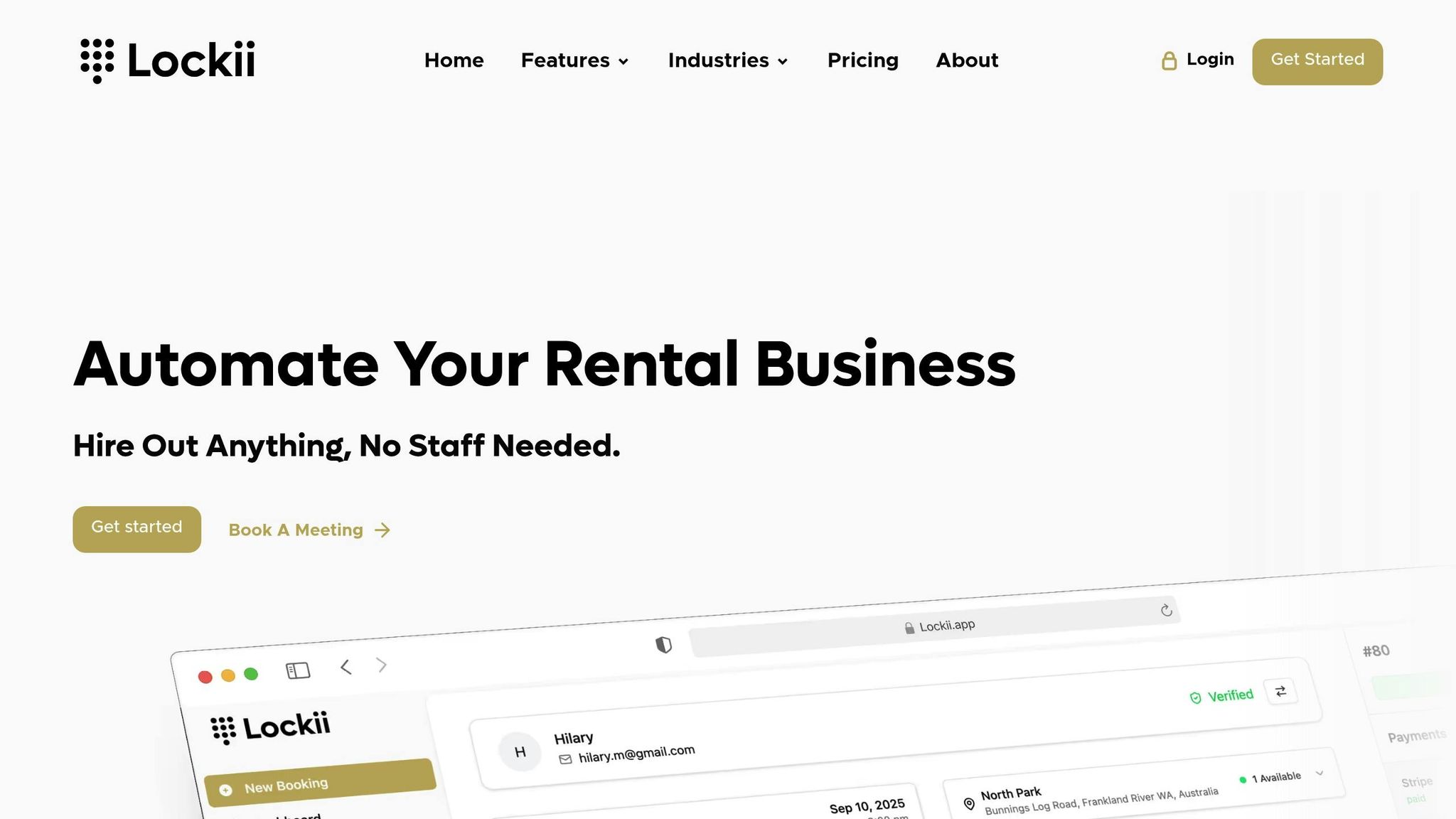
Lockii’s platform is specifically designed to tackle the challenges of managing contactless systems across multiple locations. It automates customer communications, sending pickup instructions, access codes, and return reminders without requiring manual input from staff.
The platform also offers self-service order extensions, allowing customers to extend their rentals on their own, which reduces administrative workload. Its embeddable booking widgets integrate directly into franchise websites, providing a smooth booking experience while maintaining brand consistency.
Lockii’s integration with digital lock systems like IglooHome takes it a step further. Once a booking and payment are confirmed, the system automatically generates and sends unique access codes to the customer’s phone. Integrated GPS tracking ensures real-time visibility into equipment locations, while native multi-location support lets franchisees manage all their sites from one centralized dashboard. This ensures operational consistency while catering to local market needs.
Creating Standard Processes for All Locations
Consistency is the backbone of any successful franchise. Having standardized processes ensures smooth operations, strengthens the franchisor's brand, and simplifies training across the network. Without them, you risk damaging brand trust and limiting scalability. The trick is to implement automated systems that maintain uniformity while easing the workload for franchisees.
Automated Procedures and Support
Centralized tools like digital asset management (DAM) systems are a game-changer. These systems house and update essential brand materials, offering franchisees access to locked templates and marketing assets. This allows them to customize local messaging - like adjusting pricing or highlighting local inventory - without straying from core branding elements such as logos, colors, or key messaging. For instance, a rental company can allow franchisees to tweak promotions for their market while ensuring the brand identity remains intact.
Automation also extends to workflows, connecting everything from approvals to marketing tools and operational systems. For example, when a customer completes a rental agreement at one location, the same digital process should apply across all franchises. This includes automated agreements, standardized check-in and check-out steps, and consistent issue reporting systems.
Lockii takes this a step further by ensuring consistency in documentation through order and item audit logs across all locations. Its communication automation guarantees uniformity in customer interactions, like sending the same pickup instructions, access codes, and return reminders no matter the location.
Additionally, tools like Google Business Profile help maintain consistent online information across all franchise locations. This ensures customers don’t encounter mismatched contact details, hours, or services, eliminating confusion and reinforcing trust.
By laying this groundwork, franchises can deliver a seamless customer experience through integrated self-service portals.
Customer Portals for Better Service
Building on automated systems, customer portals enhance service consistency across all locations. These platforms meet customers’ expectations for transparency and control while maintaining operational uniformity. Through self-service options, customers can manage their orders, extend rentals, and access support without needing staff assistance.
These portals streamline processes with features like real-time tracking, self-service extensions, and easy access to booking details. When customers can independently monitor their rentals and make changes, satisfaction rises, and franchisees spend less time on administrative tasks.
To ensure uniformity, customer portals also incorporate hire end quizzes and hire end photos, ensuring every rental follows the same completion process, regardless of location.
Franchisees can also leverage tools for social media, email, and SEO campaigns, which come with pre-built, brand-compliant assets. These tools enable localized promotions while ensuring the overall message aligns with the brand’s standards. This approach eliminates conflicting marketing efforts within the same market.
The outcome? A franchise system where customers enjoy the same high-quality service and brand experience everywhere, while franchisees benefit from simplified operations and reduced training demands.
sbb-itb-eb44693
Location Planning and Network Effects
Strategic location planning turns individual franchise units into a cohesive network, boosting brand visibility and operational efficiency. By combining thoughtful location strategies with automated, contactless systems, franchises can maintain consistency while scaling effortlessly. When locations are positioned close to one another, they create synergies that improve franchisee performance and make life easier for customers. Let’s dive into how grouping locations can amplify these benefits.
Grouping Locations for Better Results
When franchises are clustered in the same area, the impact of the brand is magnified. Customers are more likely to trust and recognize your brand when they encounter it in multiple nearby locations, as opposed to seeing scattered branches in distant markets.
This strategy is especially effective for rental businesses, where flexibility is often a top priority. For instance, a customer renting equipment from one location may need to return it to another if their plans change. Having multiple nearby options makes this process seamless, turning convenience into a competitive edge.
Clustering also reduces marketing costs while increasing brand awareness. A single campaign can target multiple locations, ensuring that the message reaches a larger audience and strengthens brand recall.
Operationally, nearby locations can support each other in ways that scattered sites cannot. Franchisees can share inventory during busy periods, transfer specialized equipment, or even coordinate maintenance schedules. Staff can also step in to cover shifts or help manage peak demand across locations. If one branch experiences downtime, customers can be redirected to another nearby site, ensuring uninterrupted service and satisfaction.
For clustering to work effectively, locations must be close enough to allow for practical inventory sharing and staff movement. At the same time, each site should cater to its own customer base without creating excessive overlap.
Using Data to Choose Locations
While clustering improves efficiency, choosing the right locations starts with data-driven analysis. Demographic factors like population density, income levels, and local business activity play a key role in predicting rental demand. Areas with active construction, growing small businesses, or frequent home improvement projects often offer steady revenue streams.
Traffic patterns are another critical factor. Locations near major highways, home improvement stores, or construction supply outlets naturally attract more customers. However, the best sites balance high visibility with practical considerations like accessibility and parking.
Digital tools such as heat maps and predictive analytics provide valuable insights into customer behavior, peak usage times, and seasonal trends. For example, some areas might be better suited for short-term tool rentals for weekend projects, while others may cater to contractors who need long-term leases. Understanding these patterns helps franchises tailor their services to local needs.
Regions experiencing population growth, increased construction permits, or expanding businesses are typically strong candidates for new franchises. On the other hand, areas with declining economic activity may struggle to sustain rental demand.
Many successful franchises use predictive analytics to evaluate potential sites before committing to expansion. By analyzing demographics, competition, traffic patterns, and economic trends, these tools help forecast revenue potential and identify the most promising opportunities.
Once locations are up and running, it’s crucial to monitor performance metrics to refine your strategy. Metrics like customer acquisition costs, average rental values, and repeat business rates can highlight what’s working and guide future decisions. This data-driven approach, combined with centralized systems, forms the backbone of successful franchise growth.
Training and Supporting Franchisees
The success of your rental franchise hinges on how well you train and support your franchisees. Even the most well-thought-out business model can falter at the local level without proper guidance and ongoing resources.
Training New Franchisees
Start by providing thorough training on rental management software. This should include everything from inventory tracking and booking systems to payment processing and maintenance workflows. Additionally, teach franchisees about equipment handling, customer service, safety protocols, and compliance with local regulations.
Include hands-on training with mock rental scenarios to help franchisees develop practical skills. Cover common situations like handling equipment damage claims, managing late returns, and navigating high-demand periods. The better prepared franchisees are for these situations, the smoother their day-to-day operations will be.
Another valuable step is requiring franchisees to shadow an established location before opening their own. This allows them to gain firsthand experience with your systems and observe successful operations in action. Many franchisors make this shadowing period a mandatory part of the certification process.
Once franchisees are confident in core operations, they’ll benefit from ongoing support and access to standardized resources.
Shared Resources and Support
Make life easier for franchisees by providing pre-approved branding materials, such as logos, signage templates, and marketing assets. With professionally designed materials at their disposal, franchisees can focus on running their business instead of creating these resources from scratch.
Offer standardized pricing guidelines to help franchisees maintain consistency across your network while allowing flexibility to adapt to local market conditions. This ensures a balance between competitive pricing and operational efficiency.
Centralized supply chain management can also make a big difference. By negotiating bulk purchasing agreements for equipment, maintenance supplies, and other operational necessities, you can pass on cost savings to franchisees. This not only reduces their startup expenses but also ensures they receive quality products that meet your brand’s standards.
Technical support is another critical component. Provide dedicated assistance for rental systems, payment processing, and customer portals. Quick resolutions to technical issues help franchisees maintain smooth operations and avoid disruptions to customer service.
A shared knowledge base is invaluable. Include operational manuals, troubleshooting guides, and best practice documents. Add video tutorials for more complex procedures and keep an updated FAQ section based on common challenges faced in the field.
When franchisees have access to robust training and shared resources, the next step is ensuring long-term success through performance monitoring.
Monitoring Performance and Compliance
Equip franchisees with real-time dashboards to track key performance metrics. From rental utilization rates and average transaction values to customer satisfaction scores and equipment maintenance schedules, these insights empower franchisees to make informed decisions about their operations.
Audit logs are essential for maintaining quality standards across the network. These logs can track compliance with pricing guidelines, customer service protocols, and brand standards. The goal isn’t micromanagement but identifying areas where additional training or support may be needed before small problems escalate.
Use performance data to guide improvements. For instance, if a location’s metrics start to decline, offer targeted training and hands-on support to address the issues. Regular performance reviews also create opportunities for open dialogue. Franchisees often bring valuable insights about local customer preferences, market trends, and operational challenges. This feedback can help you refine your systems and provide better support to other locations.
Ultimately, successful franchisors view themselves as partners rather than just licensors. Your growth depends on your franchisees’ success. By investing in strong support systems and fostering continuous improvement, you’ll build a network of confident, capable franchisees who champion your brand and drive its growth.
Conclusion: Creating a Successful Rental Franchise
Building a rental franchise that thrives involves five key components: centralized operations, contactless technology, standardized processes, strategic location planning, and strong franchisee support. These elements work together to create a scalable and efficient business model that keeps operations smooth while preserving quality.
A centralized branding and support system plays a crucial role in maintaining consistent messaging and customer service across all locations. This consistency builds the trust and reliability needed for rapid growth.
Implementing contactless, 24/7 rental systems makes the business more appealing to investors by lowering staffing costs and simplifying the pickup and return process for customers. Automation here is a game-changer.
Having standardized processes across locations ensures that customers enjoy the same level of service no matter where they are. Automated workflows, customer portals, and unified procedures help franchisees uphold brand standards while running their operations effectively.
Strategic location planning is another vital piece of the puzzle. Using data-driven insights to select sites ensures that each location complements others in the network, creating brand density and avoiding internal competition.
Lastly, comprehensive franchisee training and support equips business owners with the tools and knowledge they need to succeed. From initial training to ongoing resources and performance monitoring, this support transforms franchisees into passionate brand advocates, benefiting both the franchisor and the franchisee.
Modern rental management platforms simplify these processes by offering built-in tools for managing multiple locations, automating customer interactions, and running contactless operations. These platforms make it easier to scale while cutting down on the technical challenges of growing a franchise network.
As the rental industry leans further into automation and self-service models, franchises that adopt these technologies early will position themselves to attract both customers and franchisees. By focusing on systems that reduce complexity and support growth, you can build a franchise model that not only scales effectively but also ensures long-term profitability.
FAQs
What are the main benefits of using Lockii to manage a rental franchise?
Using Lockii to oversee your rental franchise brings together efficiency, consistency, and growth potential. With a centralized platform, you can simplify communication, maintain a cohesive brand presence across all locations, and ensure compliance with regulations is handled seamlessly.
Lockii also makes managing multiple locations far more straightforward. Faster decision-making becomes possible, operational costs are reduced, and you can expand confidently while keeping quality and control intact. Plus, this streamlined approach helps establish stronger customer trust as your franchise grows.
Why is clustering franchise locations important for efficiency and brand growth?
Clustering franchise locations can significantly enhance efficiency by simplifying resource allocation, cutting down on logistical hurdles, and improving communication between nearby outlets. This setup leads to smoother day-to-day operations and helps reduce costs across the entire network.
On top of that, clustering strengthens brand presence in a given area. When locations are close together, customers are more likely to notice and interact with your brand repeatedly, which builds trust and familiarity. It also creates a network effect, where the performance of one location can directly benefit neighboring ones, amplifying overall success.
How does technology help maintain a consistent customer experience across franchise locations?
Technology is key to ensuring a smooth and consistent customer experience across all franchise locations. By using standardized systems for bookings, communication, and customer support, franchises can maintain uniform service quality no matter where customers interact with them.
Beyond that, tools like real-time data analytics and performance monitoring help pinpoint areas that need attention, while automated solutions simplify operations and cut down on mistakes. These systems also support continuous staff training and feedback, helping every location deliver the same level of excellence.